

Skip to Content
Categories:

February: Teen Dating Violence Awareness Month

The month to educate, reflect, and connect with others
Credit: Karen L. ('26)
Color Editing: Mae M. ('26)
Credit: Karen L. (’26) Color Editing: Mae M. (’26)

Though much of the focus in discussions on intimate partner violence (IPV) has been about adults, in many parts of the world today, growing evidence shows that violence within teen relationships is growing more prevalent and damaging.

February is Teen Dating Violence Awareness Month (TDVAM). Offering an opportunity to spark conversations amongst young people and a time to show survivors that they are not alone, TDVAM is more than just a campaign. It is the month where people familiarize themselves with the signs of teen dating violence and IPV, especially young adolescents who are particularly vulnerable when they enter their first relationship.

With various “red flags” often hidden within a relationship, it becomes crucial for individuals—especially teens—to learn to identify the early signs of abuse and to know when to seek help or safely exit the relationship. In the United States, the One Love Organization, which educates youth about healthy and unhealthy relationship behaviors, outlines the 10 Signs of an Abusive Relationship, each of which serves as an indicator for something that may be wrong beneath the surface. These include: Intensity, manipulation, sabotage, guilting, deflecting responsibility, possessiveness, isolation, belittling, volatility, and betrayal.
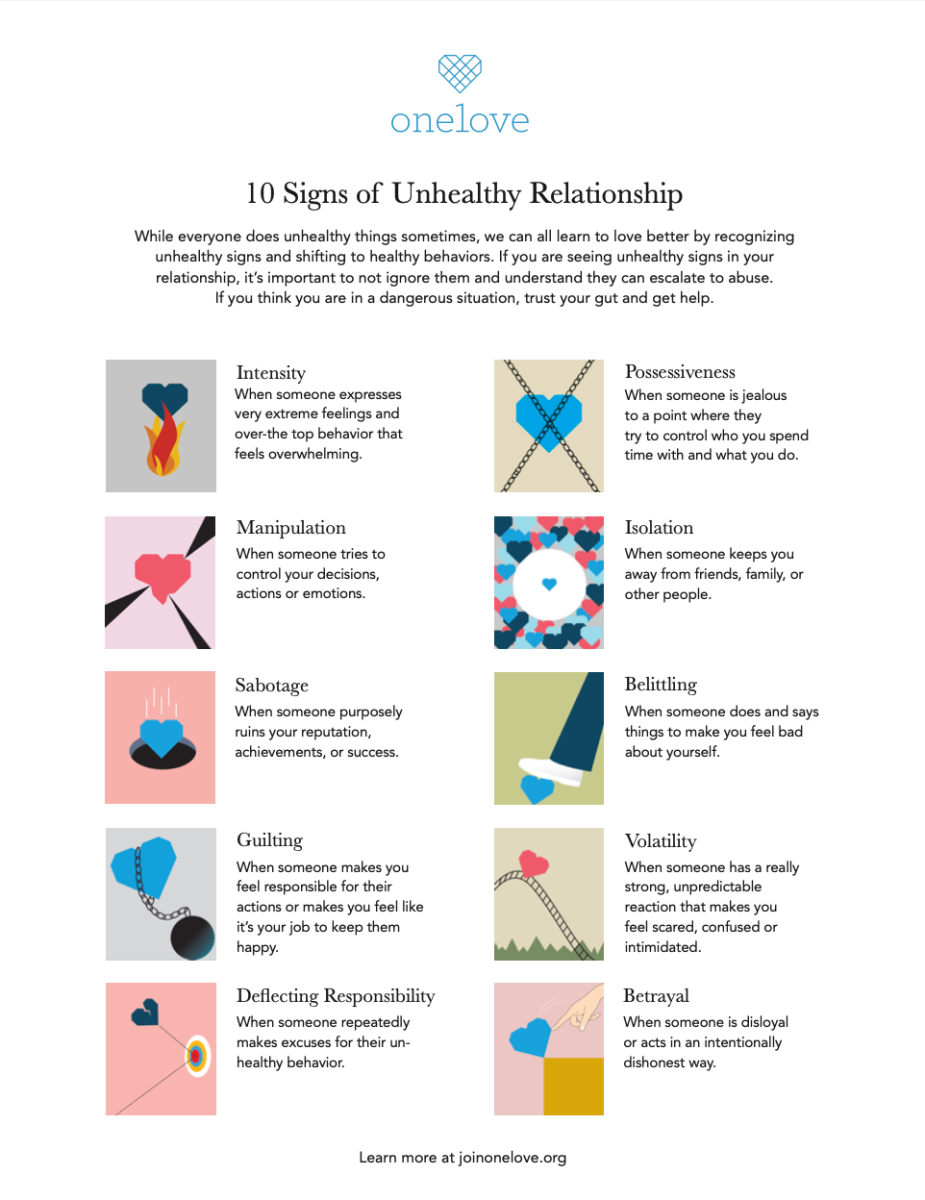
While these signs might appear subtle or may initially be interpreted as affectionate, they are often early indicators of deeper patterns of control or abuse. For adolescents, relationships can blur the line between passion and possession, care and control. Because of this, education and early recognition are more vital than ever. 

Countries across the world have been silently making progress combating teen dating violence and IPV. With the help of non-profit organizations in the United Kingdom, Australia, the United States, and Japan, they have worked to establish toolkits and educational workshops to raise awareness of the issue. 

The United Kingdom: The Work of Youth Endowment Fund (YEF) Advocates to Protect Young Adolescents from Teen Dating Violence

One organization that is preventing youth violence in the United Kingdom is the Youth Endowment Fund (YEF), a charitable trust established in March 2019 by the children’s charity Impetus. The creation of YEF was due to the growing realization that stopping violence among young people begins through early intervention and education, not reaction after harm occurs. YEF’s mission is to identify early signs of risk among children and adolescents through its YEF Toolkit while simultaneously expanding support programs and bystander intervention training across schools and communities.
Recent findings in a YEF survey involving over 10,000 children aged 13-17 in England and Wales highlight the extent of IPV among adolescents. The data revealed alarming levels of abuse within both teenage relationships. A major source of concern is digital media, which can serve as another platform for coercion and emotional harm. Constant messaging, location tracking, online threats, and non-consensual sharing of private images have emerged as newer forms of manipulation and control. With reports that 27% of teenagers having seen sexual assault imagery or threats online and 33% encountering content that promotes violence against women and children, this directly points to the normalization of misogyny and sexual exploitation on social media platforms. In addition, experts have warned that certain boundaries in the digital media are poorly understood by teenagers, leading them to mistake them as signs of affection or closeness rather than control.

YEF’s findings also highlight a gap in education about healthy relationships: only 55% have received lessons on consent, 43% on harassment, and only 40% report receiving lessons on how to be in healthy, respectful relationships. Many adolescents lack the vocabulary and understanding needed to identify abuse dynamics, and schools often treat these topics as peripheral—skipping lessons or choosing to rush through the uncomfortable discussions. 

YEF’s CEO, Jon Yates, has responded to these concerns by stressing the crucial link between education and prevention: “Our findings are alarming, but they make one thing clear — high-quality relationships and sex education are essential. We need to teach boys and girls to recognise harmful behaviours and safely speak up or seek support when boundaries are crossed. Research shows these lessons can make a difference. It’s vital we equip young people with the skills and confidence to protect themselves and others.”

Breaking the Silence: U.S. Schools Struggle to Address Teen Dating Violence Despite Rising Awareness

The murder of two 17-year-old girls by a male acquaintance in late 2025 has sent shockwaves through their community of Cranford, New Jersey. Sarah McMahon, a violence prevention expert at the Rutgers School of Social Work, reported that this was not only a tragedy, but a devastating reminder that warning signs for teen dating violence are too often unaddressed. Mahon has also co-authored a study with Avanti Adhia from the University of Washington examining how schools perceive and respond to IPV. Their findings, published in the Journal of Adolescent Health, have revealed that although awareness is high, action remains inconsistent. 

Despite the fact that 38 U.S. states have laws that require school programs to address dating violence, teachers are lacking in training, schools struggle to fit prevention programs into the curriculum, and most laws don’t include funding to support implementation. Some districts even choose to avoid the topic altogether, viewing it as being “too uncomfortable” or inappropriate for the younger students.  However, McMahon and Adhia continue to emphasize that early education is non-negotiable, and ignoring this issue will cause the cycle of abuse to continue.

Their research also highlights the importance of bystander intervention programs like Dating Matters and Green Dot, which train teenagers alongside school staff to identify abuse, step in safely, and to empower individuals who are afraid to speak up. However, these initiatives require stable funding and leadership, and resources are currently limited as federal grants and public attention decrease. 

Adhia analyzes: “Recognizing abusive behavior can be challenging, even for someone experiencing it. We heard from many teens in our study that they often don’t know what is considered unhealthy or abusive. And, because they don’t always tell adults about their relationships out of privacy concerns or shame, school staff and parents also may not realize what is going on.”

Challenging the Normalization of Abuse: Australia’s Fight Against IPV Among Youth

New data from the Australian Institute of Family Studies (AFS) reveals that 3 in 10 adolescents aged 18-19 report experiencing some form of IPV. With emotional and psychological abuse being the most common, 16% reported that they were told by their partners that they were “not good enough” and that 12% have been blamed for their partner’s aggression. Many young Australians have accepted these behaviors as being “normal” and have mistaken these jealous or controlling behavior as signs of love, showing how normalization of abuse continues to thrive. 
Organizations such as The Survivor Hub have worked to reverse this trend by bringing in trauma-informed care, legal guidance and community-based empowerment programs. In particular, Anna Coutts-Trotter is a powerful advocate in this movement. Having experienced an abusive teenage relationship and now advocating for survivors alongside her mother, Tanya Plibersek, a long-time champion for women’s rights and social reform, their combined activism has brought a new visibility to the issue of IPV. 

The Growing Change in Education, Awareness, and Cultural Change in Japan

In Japan, discussions around dating violence have also only recently begun to gain widespread attention. A report by Cocreco based on an official Cabinet Office survey has found that among adults aged 18 and over, 22.7% of women and 12.0% of men have experienced at least one form of abuse—physical, psychological, economic, or sexual. What was previously estimated as being one in four couples experiencing dating violence has now shifted to one in three, underscoring a troubling upward trend. 

At Sakai High School in Sakai City, a recent lecture organized by the Fukui Women’s foundation which supports domestic violence victims, sought to educate and dispel misconceptions. Reported by Fukui TV, the counselor hosting the session emphasized that domestic violence is not limited to only physical harm but can also include emotional manipulation, restrictions on freedom, invasive monitoring and coercive sexual demands. Commenting on the lecture, one student shared: “It was stuff I’d heard other kids talking about or overheard, and I started wondering if maybe that was what it was.” Another mentioned, “I didn’t realize dating violence was so common. Since restrictions can range from mild to severe, it’s hard to know where dating violence actually begins.”

Local surveys in the Fukui Prefecture have further revealed that young victims often hesitate to seek counseling due to fearing shame or disbelief from their peers. These findings further exemplify the need for targeted education in middle schools, high schools, and universities so that the students can recognize signs of early abuse and know where to find help. 

The Role of Parents and the Community 

While schools play a vital role, Japanese mental health professionals have also further stressed that family environments are equally as crucial. Marika Konosu, a mental health nurse and educator, has advocated training not only for students but also for parents to understand and respond effectively to IPV. 

In an interview with Cocreco, Konosu emphasized that no matter the response, victims should never be blamed for how they react to distressing situations. She also highlights that parents should never interrogate their child or demand detailed explanations about what happened. Konosu explains that doing so can cause secondary trauma and further isolate the victim. Instead, she encourages caregivers to rebuild trust with their child through empathy and to prioritize safety over personal judgment. Konosu believes that it is important to make use of public counseling and welfare resources as well. 

“The priority is to earn their trust, help them heal emotionally, and gradually build up the energy to take action.”

The Path Forward Against Teen Dating Violence

Although the social, cultural, and legal contexts differ across countries, several common threads emerge from their experiences. 

1. Education is the strongest form of prevention

It becomes evident that there needs to be early, consistent, and education-based support to help young people identify harmful behaviors before they escalate.

2. Digital safety is now a central part of addressing IPV

In an age where relationships need to develop and unfold online, digital abuse—cyber-stalking, image-based abuse, and coercive messaging—needs to be treated with the same seriousness as physical violence. 

3. Support systems need to involve families, schools, and communities. 

To combat IPV, it is no longer the sole responsibility of victims or law enforcement. Communities must normalize open discussion in order to provide accessible and nonjudgmental help. 

4. Legal policy must evolve

Many survivors remain unprotected due to legal gaps or inadequate law enforcement. It is evident that the government must strengthen protective laws to ensure victims’ safety and hold perpetrators accountable.  


February–Teen Dating Violence Awareness Month–is an important reminder that abuse in teenage relationships is a real issue. Many young adolescents suffer in silence due to a lack of awareness or trust in adults, and it is crucial that we act against IPV through educating teens, supporting young carers, and equipping professionals with the right tools. It is through these actions that communities are able to promote healthy relationships, detect early warning signs, and break cycles of abuse before they deepen.

More to Discover