







































What is “person-first language”?
Person-first language (PFL) is a model of language used when talking about individuals with disabilities, emphasizing the individual’s person before their disability. The idea of person-first language began gaining traction in the 1980s and was promoted by disability rights organizations and self-advocates to reduce stigma and to challenge stereotypes.
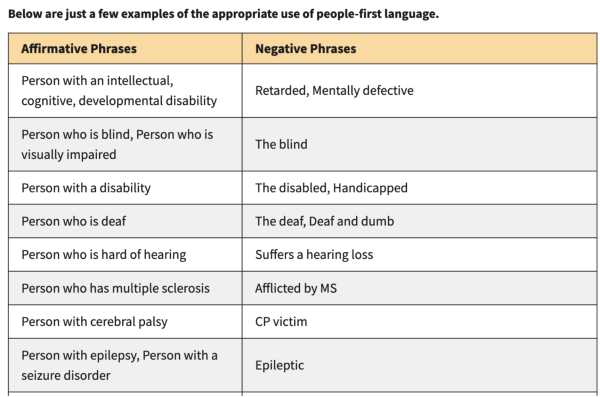
Person-first language can look different depending on the context, but it generally involves describing an individual with a condition as a “person with __,” instead of “a __ person.” For example, in person-first language, “a person with dyslexia” and “people with disabilities” is used instead of “a dyslexic person” and “the disabled.” Another way to use person-first language in our lives is to talk about people’s conditions only when necessary, focusing on the person, not their condition(s).
Person-first language is often promoted as it helps us reduce stigma against people with disabilities, fostering a much more inclusive environment. Proponents of person-first language believe that it better allows for the acknowledgment of people’s identities; disabilities are only one part of who they are, and generalizing them solely based on their disabilities is harmful because it disregards their identities beyond that aspect. It is important to recognize that people with disabilities are people, too, with hobbies, personal interests, hopes, dreams, and desires.
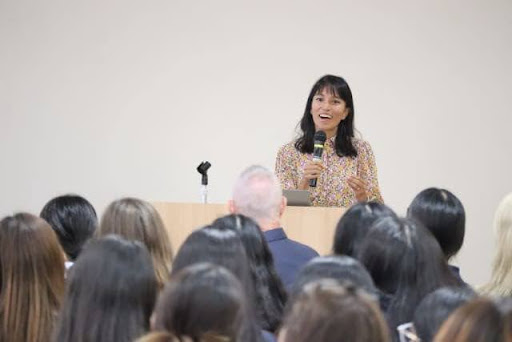
Ms. Durrant, the school counselor at ISSH, notes that this acknowledgment is already occurring within the medical and educational fields. She states that this is important because, from a professional standpoint, the language we use has a significant impact on how we perceive others and the world. Language evolves over time, and terms that were once acceptable may now be considered harmful or derogatory. When we use labels, we risk “othering” students — treating them as a category to be managed rather than a person to be supported. Therefore, it is important to model the use of PFL and gently remind and correct colleagues and students when incorrect terms are used. Practicing the correct language can create a culture of safety and empowerment.
However, the people-first rule does not necessarily apply to all types of disabilities. Some communities, such as the Deaf and autistic community, are currently shifting toward Identity-First Language (e.g., “I am Autistic”) because they view their disability as an inseparable, proud part of their identity. Therefore, it is important to ask the individual about their preferences, as people may self-identify in various ways, and to respect those preferences.
Whether a community prefers to use person-first or identity-first language, the underlying goal is the same: to acknowledge and respect how people define their identities and preferences. It is through respecting people’s personal interests, desires, and opinions, that we are able to make meaningful progress towards inclusivity.
To learn more about implementing person-first language and language that best represents different communities, read this resource by the National Disability Institute, the “Person-first and Destigmatizing Language” style guide by the NIH, or this guideline from the District of Columbia Office of Disability Rights.
 Loading ...
Loading ...