
































The internet has not rested since the showgirl, Taylor Swift, released her long-awaited 12th studio album at midnight on the third of October titled “The Life of a Showgirl”. Large expectations were set for this upbeat album, being Taylor’s first release since the world-renowned Eras Tour ended. Not surprisingly, Swift broke Spotify records with over 5 million pre-saves for the album and Billboard records for the most albums sold in the first week, selling over 4 million album units exclusively in the US. This nearly doubled the previous milestone, held by Adele for her 2015 album, 25, which sold 2.4 million albums in its first week. Additionally, $46 million was generated at the global box office for Swift’s film, The Official Release Party of a Showgirl, a strategy famously employed for her concert film, Taylor Swift: The Eras Tour.
Although achieving staggering commercial success, this highly anticipated album has been inundated with heavy criticism – even from Taylor’s own Swifties.
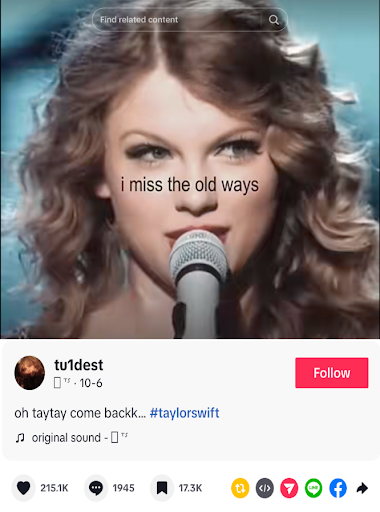
The Guardian’s Alexis Petridis rated the album two stars, writing that it “isn’t terrible: it’s just nowhere near as good as it should be given Swift’s talents, and it leaves you wondering why.” And he’s not alone. Fans across TikTok mourn the “death” of the old Taylor, editing clips from her previous eras, such as 1989 and Lover, into fake obituaries on social media. Across comment sections, listeners describe the album as “inauthentic” and “AI-generated” compared to her previous masterpieces.
A fan from our own student body, Momoco C. (‘29), commented that “70% of Taylor’s new album was good, but a few songs were kind of disappointing, especially in terms of her lyrics, like Folklore, because that’s what she’s known for”. Similarly, many Swifties point to the formerly renowned “modern-day Shakespeare’s” underwhelming lyricism as the root of their disappointment. Mockery quickly spread across the internet, as listeners compared her drastic shift in poetic lines, such as “elegies eulogise me,” (“The Lakes”: Folklore), to what many perceived as painful attempts at shade like “did you girlboss too close to the sun?”(“CANCELLED!”: The Life of a Showgirl). This profound contrast has left fans questioning what happened to Taylor’s signature Shakespearean ballads and emotional vulnerability.
Frustrated fans expected a glamorous, bold sound, reflecting the flamboyant dazzle of the album cover, which was released as a teaser. As one user, @KillingSwiftly wrote on X, “The album’s sound didn’t really match its aesthetic and the way it was promoted as ‘dance’.” Many anticipated The Life of a Showgirl to be a long-awaited successor to Reputation and 1989 – albums recognised for their upbeat, Max Martin production – upon its reveal that he and Shellback would be co-producing. Instead, those familiar “pop bops” were noticeably absent.
As the online debate intensified, Taylor addressed the backlash herself. Appearing on Apple Music’s The Zane Lowe Show, Taylor tells Lowe, “I have a lot of respect for people’s subjective opinions on art.” Rather than reacting defensively, Taylor conceded that the album’s buoyant tone may not resonate with listeners who aren’t in the same optimistic chapter of life she is currently expressing through her music. She explains that “on the theme of what the showgirl is, all of this is part of it,” implying that the public scrutiny, reactions, and even backlash are all integral to the album’s themes. This statement manifests the mindset of a true showgirl – one who treats controversies as a part of the performance, not as a setback
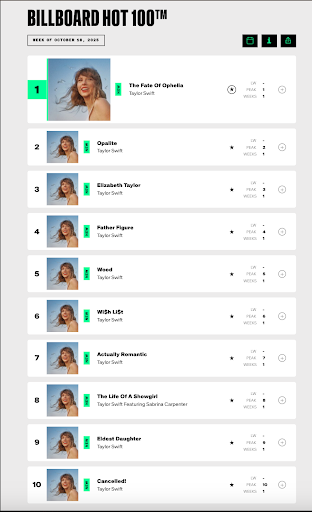
Not all commentaries have been negative. Despite floods of critiques, the album’s commercial performance has continued to soar, and “The Life of a Showgirl” has been dominating Billboard’s Hot 100 since its release. The 12-track album led as the top 12 songs streamed worldwide for two consecutive weeks and continues to remain on the list. In contrast to The Guardian’s two-star review, Rolling Stone’s Maya Georgi gave the album a glowing five-star review, applauding Swift for “shooting into a fresh echelon of superstardom — and hitting all her marks.” Longtime fan and faculty member at Sacred Heart, Ms Francisco, found the soundtrack “catchy and savage in its own way.” She acknowledges its emotionally rich layers and ambiguous interpretations, stating that it “really is a Taylor trademark; honest, fearless, and a tad bit savage.”
The whimsical nature of Taylor’s new “eras” of music is nothing new. Neither is the ephemeral wave of hate that follows each release. Throughout her 20-year career, the hate she receives ultimately leads to admiration within her growing fandom. So, this ever-evolving showgirl hasn’t fallen off. The Life of a Showgirl is simply another misunderstood era.