

We need to face reality. A statement that is quite bold, yet true.
Today, global conflict and crisis no longer reach us through news bulletins or radio alerts, but through our screens, between makeup tutorials and dance trends. As we continue to fear a potential World War III, Gen Z has chosen to respond not with outrage or panic—but with humor. The viral social media caption “first war, kinda nervous,” have led to mixed responses, with some finding it funny and relatable, while others feel they leave a bad taste in their mouths in light of real suffering.
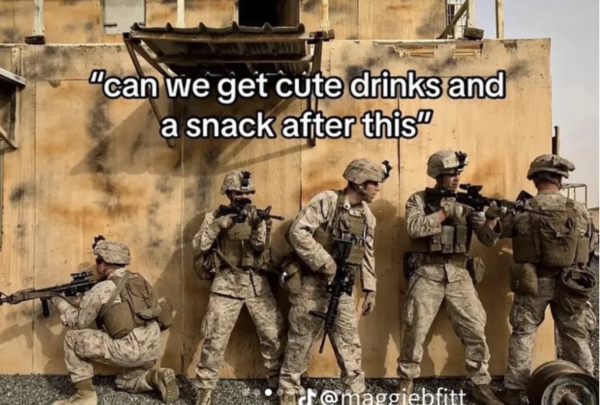
While these jokes may seem shallow, because Gen Z does not know how to cope with the uncertainty of the future, they have chosen to deal with it through irony and memes. Yet, while this humor may help Gen Z cope, it has also weakened our sense of empathy and seriousness towards real-world suffering.
As a result, our generation has become emotionally detached from the world. Desensitized to real issues. And have chosen to avoid reality to cope.
According to Gill Gifford’s Sunday Times article, young users have turned to meme-sharing as an act of emotional survival. Explained by psychologist Dylan Benyon, the pattern appears to have shifted from mockery to managing emotional overload. With live footage of explosions, devastation, and loss appearing on their phones in real time, humor has become a sort of “pressure valve.” As he describes this as a way for Gen Z to “soften the emotional impact” of the endless exposure to internet news, it’s seen that joking is not cruelty, but containment.
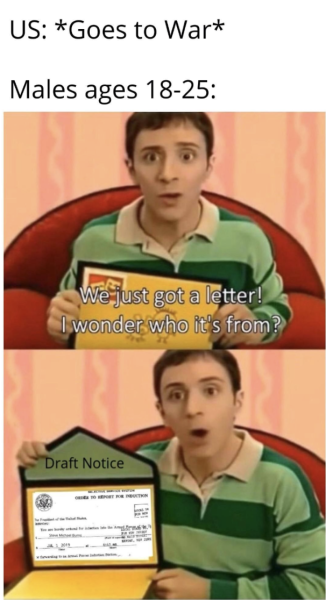
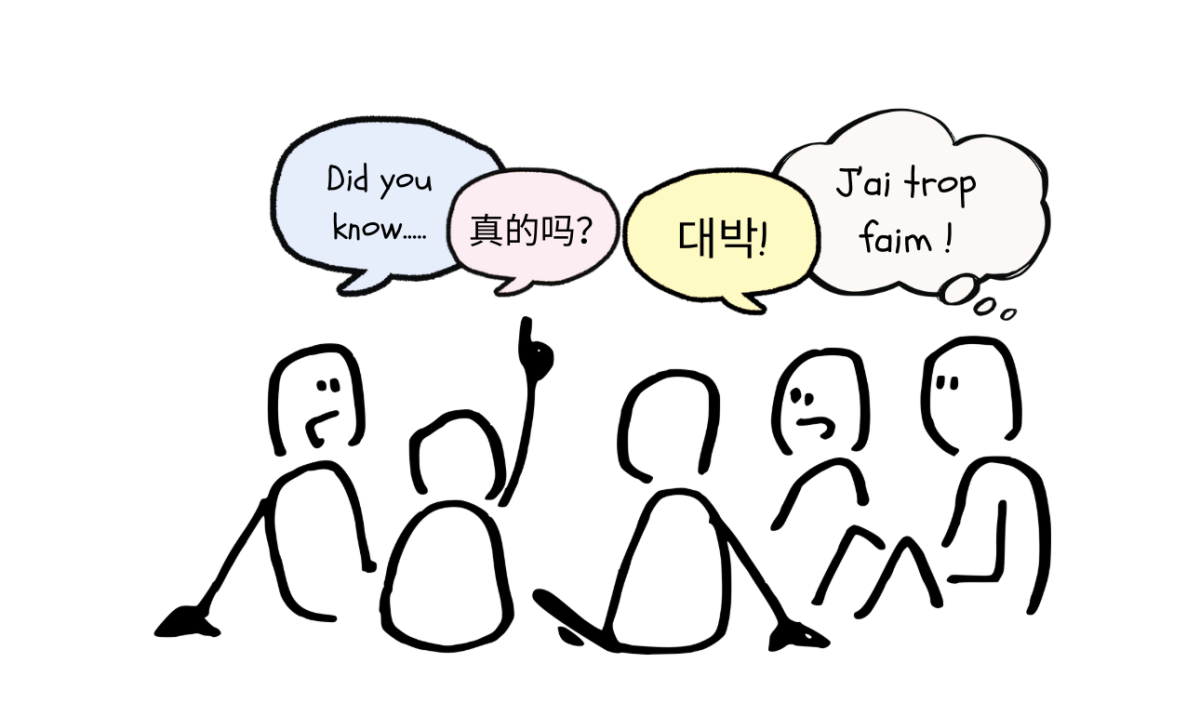
As global tensions rise between countries, it appears that memes reveal a deeper need for a sense of belonging. The memes have been described as being a distinct cultural language that combines pop references, irony, and emotional honesty. For many, these memes have become an emotional shorthand for expressing what they can’t articulate: “I’m scared,” “I feel lost,” or “I’m not okay.” Sending one to a friend, reacting to a story, or leaving a comment that simply says “us” reaffirms a community in the world. In that sense, it appears that the memes have given Gen Z a new emotional vocabulary with which to express themselves.
But as this culture of constant irony grows, what was once a form of relief risks turning into emotional numbness. Though the memes give comfort to Gen Z, they also lead to desensitization. It becomes clear that when every tragedy becomes meme material, humor and horror become indistinguishable. Repeated exposure to war footage and disaster clips, naturally interspersed with jokes, has led to increased emotional fatigue. Though the fear momentarily eases through the memes, so does the empathy.
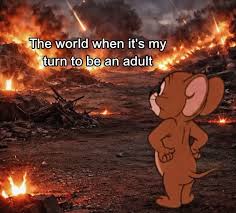
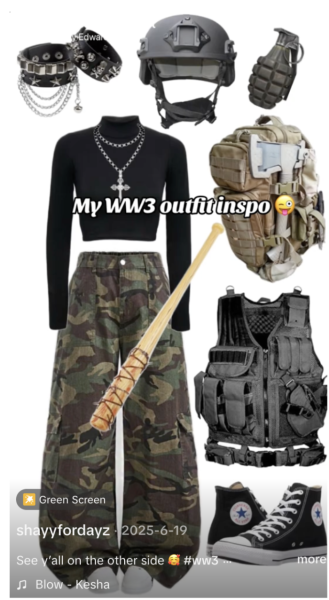
Users have begun treating potential war scenarios as fashion trends or internet jokes. Some have posted “WW3 outfit hauls,” while others pair military footage with upbeat songs like Kesha’s “Blow.” Beneath the humor, however, lies avoidance. Not just coping, but turning away from a reality that has become too big to face. Irony, though originally meant to protect emotion, has started to erode it. When outrage and empathy are replaced by scrolling laughter, awareness has begun to fade, and global suffering has become just another aesthetic; something that fits neatly into the feed.
That’s the core problem.
Humor without reflection can lead to emotional avoidance. It’s easier to joke about society collapsing than to confront how powerless we feel. But if every disaster is turned into a punchline, our ability to empathize—to act—erodes. We need humor, yes. But not at the expense of awareness.
It has come to a point where coping mechanisms should comfort us without numbing us. Memes should be used to start conversations, spread awareness, and humanize crises, not overshadow them.
In the end, Gen Z’s rise in crisis humor reveals the truth about the state of our current world. As our generation goes under constant pressure from climate dread, economic instability, and especially war, we have grown desensitized to the gravity of the crises surrounding us.
Laughing through fear is understandable. But to truly grow and make meaning from it, we need to put down the irony and look directly at the truth. Comedy may help us cope, but facing reality is what will get us through it.