

















































One fall evening, my family and I sat at our kitchen table, watching TV to catch the 7 o’clock NHK broadcast, as per our nightly routine. You can probably imagine my shock when what I saw was a man crawling on all fours in a bear costume. This was certainly not something I expected from national TV.
But as I watched, mouth agape, at the bear-man getting “shot” and falling over, I realized that the zoomorphic display was not high-concept performance art, but instead a simulation: the city or council hosting the event was training people to effectively and safely respond to bears entering civilian spaces (the NHK clip doesn’t seem to be available online anymore, but you can watch some similar news reels here and here).
Bears have been a hot topic in Japan as of late, and for good reason. Japan has always had a bear population, but they mostly stayed out of the way of people. However, the number of bears and bear-human interactions has increased considerably in the past few years – the number of bear sightings between April and October 2025 exceeded 36,000 – and in a November 2025 article, NHK reported that “at least 220 people have been killed or injured in bear attacks in the current fiscal year.”
Many Japanese are, understandably, scared. The New York Times reported that Japanese living in rural areas are “walking around with bear spray […] wearing bells to scare the bears away [… ] And children are no longer walking to school alone anymore.”
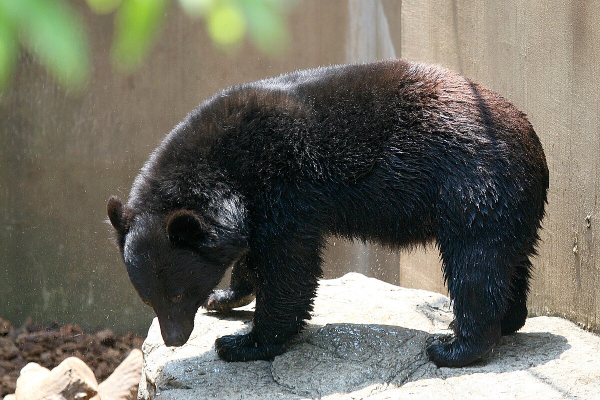
The issue has become so intense that Japan mobilized their Self-Defense Forces – equipped with, amongst other things, net launchers, traps, and bulletproof jackets – in November to help control the bears. The Japan Times also reported that “the environment ministry has set aside ¥3.4 billion ($22 million) for “bear countermeasures” in this year’s supplementary budget.”
The origins of Japan’s bear problem aren’t really a mystery: it’s been stated by several reputable organizations that the issue can partially be attributed to the decreasing population in rural areas, which also reduces the number of active, licensed hunters and “embolden[s]” bears to enter areas that might have deterred them earlier.
But another known factor is that climate change is uprooting the bears’ lives – rising global temperatures and climate change have disrupted crop yield of acorns and beech nuts that usually make up the bear diet. In the absence of acorns, bears come down the mountain to human settlements to find alternatives that help them store energy for hibernation. Delayed hibernation cycles that result from climate change may also increase the frequency of human-bear interactions.
The reality is that Japan’s very real bear problem is, at least, in part, a microcosm of the larger issue of climate change. The bears are only one of the many tangible signs that have been popping up for years that definitively show us that global warming is real and poses dangers to humans.
Unfortunately, the world has seen a disturbing trend of countries and major organizations backing out of their commitment to environmentalism and fighting climate change. In November, the United Kingdom announced that it would “not contribute to a flagship fund for the world’s remaining tropical rainforests.” This was not only shocking given the UK’s heavy involvement in designing the fund heavy involvement in designing the fund, but disappointing – the fund – and the rainforests it will support – largely depend on money from “developed countries like the UK” for funding. An article by the World Economic Forum reported that “only 121 [now 122] countries submitted NDCs [Nationally Determined Contributions]” – environmental commitments that all countries under the Paris Agreement are mandated to submit every five years – and these 122 countries only account for 75% of global emissions (the 75 countries who have yet to submit their NDCs represent the other quarter). The United States – the “largest contributor to human-caused climate change” – under the Trump administration has introduced “sweeping rollbacks to climate policy.”
Even Japan, who has been making an effort to develop more environmentally-friendly practices, is not doing enough. A 2025 OECD report notes Japan’s progress, but also notes its shortcomings, including the fact that “its energy mix remains carbon intensive and recycling efforts need strengthening, especially for plastics.” Climate Action Tracker “rates Japan’s climate targets, policies, and finance as “Insufficient”” and EnergyTrackerAsia notes that Japan has the financial means to do more for their decarbonization efforts.
The bears are a glaring reminder of what “insufficient” efforts do – they disrupt nature’s long-established cycles and are dangerous to human health and (both real and perceived) public safety.
It’s been said countless times, but climate action is imperative. And if the devastation of communities – of humans, plants, and animals – all over the world isn’t enough of an incentive for Japan to be more aggressive in their climate action, then the absurdist reality of men crawling in bear costumes on national television should.

