

































Last Monday marked Emperor Naruhito’s 66th birthday, as he greeted the general public at the Imperial Palace in Tokyo. He appeared before a crowd of 15,000 people, waving alongside Empress Masako and their daughter, Princess Aiko.
Official public greetings are common among royal families worldwide, of which there are 26 today. Among them, the Japanese Royal Family dates back to 660BCE, making it the world’s oldest continuing monarchy.
This long history may partly explain the family’s extremely reserved nature. Compared with other royal families, the Japanese Royal Family is much quieter and restrained — they do not participate in media interviews nor publicly display much personality. The Imperial Household Agency only created an official Instagram account in 2024—nearly 15 years after the British Royal Family launched theirs—in part to combat online misinformation and media speculation.
The Japanese Royal Family is also known for its conservatism, particularly for following a strict male-only line of succession. This contrasts with other countries such as the U.K., Sweden, Norway, and the Netherlands, which all allow female succession. Whilst there have been debates about a possible constitutional change due to a shortage of male heirs, Prime Minister Sanae Takaichi has stated in her policy statements that she intends to oppose these reforms.
What makes the Japanese Royal Family so private and distinct from other royal families? Much of the answer lies in its 2,600-year history. Throughout the Heian and Edo periods, up until the Meiji Restoration, the Emperor was considered a divine figure. Through the consolidation of power and Japan’s modernization, emperors gradually came to be defined as political figureheads whilst still maintaining sacred status.
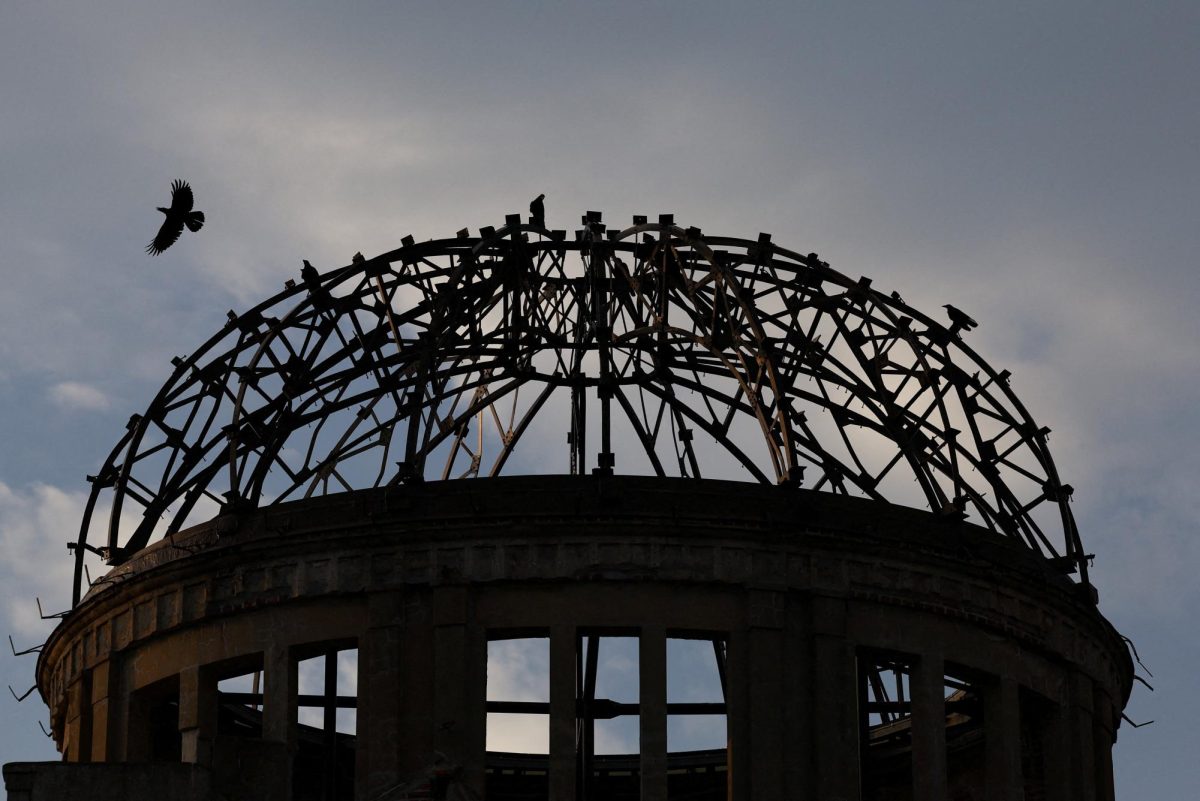
One of the most significant and controversial emperors was Hirohito, who served as head of state during World War II. As both emperor and leader, Hirohito played a significant role during Japan’s period of militarism, even approving Japan’s decision to go to war. While many historians debate the extent of his involvement in decision-making during the war, Hirohito was nearly tried as a war criminal following Japan’s surrender in 1945. However, US authorities during Japan’s post-war occupation chose not to abdicate the Royal Family, believing that doing so would greatly destabilize the country. The devotion and emotional attachment of the Japanese people to the emperor were so immense that US officials feared retaliation if he were removed.
Hirohito, therefore, remained on the throne but formally renounced his divine status under Japan’s new constitution. Following the country’s transition from an imperial state to a constitutional monarchy, the emperor became defined as “the symbol of the State and of the unity of the people.” This meant that although the emperor did partake in ceremonial and social duties, his role became strictly symbolic, with no political or governmental authority.
The turbulent and controversial history of the Japanese Royal Family has shaped how it presents itself today. Following the death of Hirohito in 1989, his son, Akihito, succeeded him as the first emperor to hold a completely non-divine status. Akihito’s 30-year reign was considered especially significant as he became “emblematic of the country’s post-war modernity.” He constantly advocated for peace and repeatedly emphasized the importance of remembering the war.
Akihito was notably also the first emperor to express “deep remorse” for Japan’s wartime actions and atrocities. Though not a formal apology, Akihito’s comment was considered a significant turning point: for the first time, a member of the Royal Family openly expressed repentance for Japan’s wartime past. But through these carefully worded statements, the Japanese public has become attuned to what seems to be an unspoken truth—the current Japanese Royal Family feels profoundly responsible for its past.
Yet, the sensitivity of the issue in both domestic and international politics has made it almost impossible for the Royal Family to deliver a direct apology. A similar situation can be seen with the British Royal Family and the nation’s past of colonialism and slavery. Although the British Royal Family has expressed regret for past wrongdoings, King Charles cannot formally apologize, as he must follow UK government policy and maintain political neutrality. As a result, such statements as this come out as both deliberate and restrained, shaped by political tensions.
This restraint, however, comes at a cost for the Japanese Royal Family — it has largely diminished their freedom and the ability to express themselves openly. The Royal Family avoids controversy at all costs, refraining not only from political involvement but even from expressing their personal feelings.
This restrictiveness is further reinforced by the Imperial Household Agency (IHA), which oversees nearly every aspect of the Royal Family’s life, from their daily routines to official duties. The IHA has been criticized in the past for being highly conservative and controlling, and CNN states that “Every image and appearance is carefully curated by the Imperial Household Agency, which tightly controls what the public gets to see and hear about the royal family.”
Indeed, the IHA’s tight supervision has had many consequences, particularly for women who marry into the Royal Family. Many women have reportedly suffered from mental distress, especially those who were commoners before marrying male royalty and joining the Royal Family. The most prominent example is Empress Masako — before joining the Royal Family, she had a distinguished diplomatic career in Japan’s Ministry of Foreign Affairs and studied at both Harvard and Oxford. However, soon after her marriage to Emperor Naruhito, she was diagnosed with adjustment disorder, facing immense pressure to conform to ancient traditions and following strict expectations enforced by the IHA.
The Japanese Royal Family’s restrained nature could be shaped by culture and tradition. Nevertheless, it is evident that the Japanese Royal Family still feels immense responsibility for their past involvement in the war, which has ultimately created an imperial household that speaks carefully and acts conservatively.
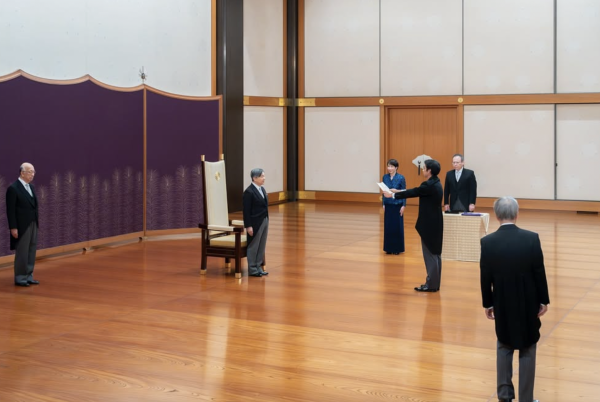
Whilst the British Royal Family bears a similar weight of wartime responsibility, they have always maintained a more public presence. Charities often reflect Royal Family members’ individual interests, allowing them to express their personal identities. For the Japanese Royal Family, however, almost all charities and formal visits are carefully structured by the IHA, and therefore are not undertaken on personal initiative. Even academic or research interests pursued by family members tend to focus on neutral subjects, and their voices are rarely heard directly—even on television, the audio is cut off when they speak as a precaution to avoid controversy.
Many people in Japan are curious to know more about the Japanese Royal Family, including their true interests, the causes they genuinely care about, and their hopes for the nation’s future. Nearly eighty years ago, the emperor renounced his divine status to become a figure accessible to the public. Yet, a certain distance still remains—whilst the family no longer claims divinity, they still feel untouchable and difficult to connect with.
The Japanese Royal Family must continue to reflect on the past, but they must also strive to reach out to the Japanese public and show more of their human side. They are so restrained that they appear remote, and almost too distant to remain fully relevant. If there is a need for them to continue to redeem the past, that won’t be achieved through a stance that is consistently uncontroversial and sequestered.
Whilst the family’s traditions, political sensitivity regarding Japan’s wartime past, and strict oversight by the IHA encourage restraint, the Japanese Royal Family must become more involved with the Japanese people if they truly wish to remain relevant and meaningful for Japanese society.