

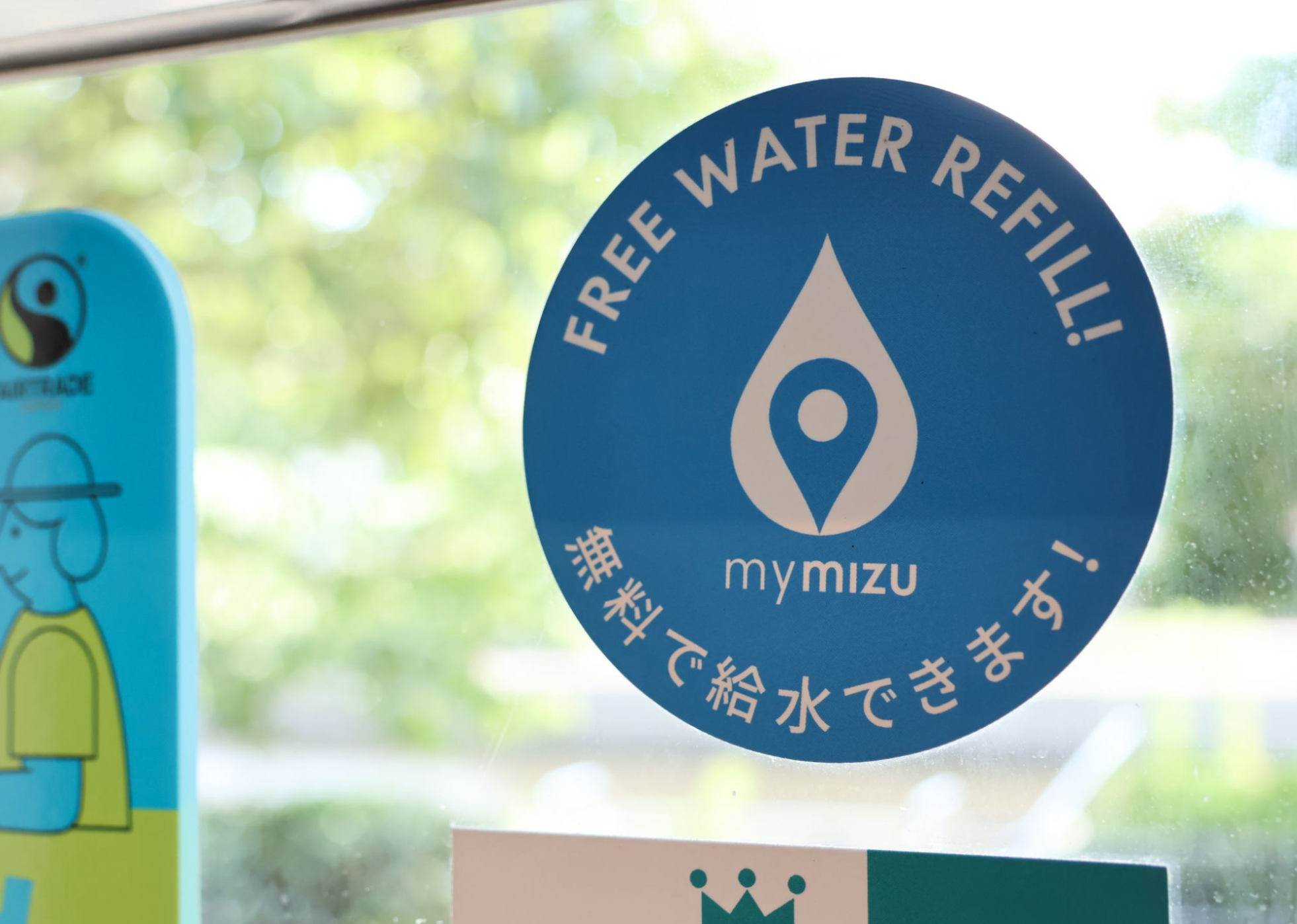

“Hey! It’s a cool idea, let’s give it a shot!” That thought drove the founders, Robin Takashi Lewis and Mariko McTier, of mymizu, a social enterprise that provides free water refills globally to combat litter, primarily plastic bottles, on a tropical beach in Southern Japan. The founders aim not only to reduce the use of plastic bottles but also to continue to embed a social infrastructure into society to improve water access. Mymizu has benefited communities globally, with refill points in more than fifty countries around the globe.
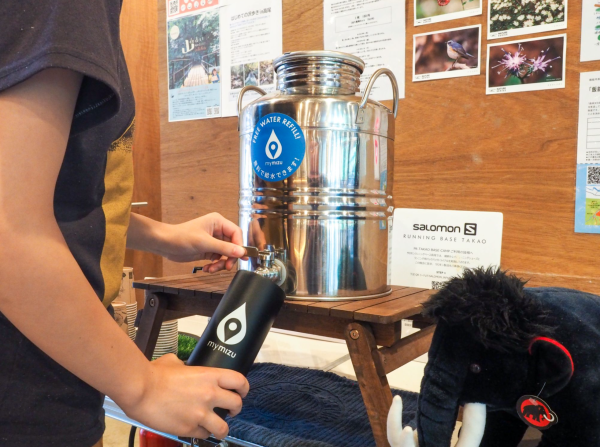
Photo Credit: mymizu
According to the U.S. Geological Survey (USGS), “about 71% of the Earth’s surface is water-covered, and the oceans hold 96.5 percent of all Earth’s water.” Then why did the United Nations, early this year, “declare the dawn of the era of global water bankruptcy”?
Water scarcity has long been a major problem in developing countries, especially in sub-Saharan Africa, where many women and children must travel 33 minutes just to collect water, according to UNICEF. However, this water shortage has now deteriorated due to rising geopolitical tensions.
Water has even been weaponized and is ranked among the top 10 risks in Eurasia Group’s 2026 list, a leading political risk advisory firm. Water infrastructure has been targeted as a “tool for non-state actors exploiting state weakness.” The Kakhovka dam, the largest dam in Ukraine, was attacked by Russian forces, which caused massive water contamination from “‘highly toxic’ heavy metals – which include lead, cadmium, and nickel” reported by the Guardian. UNICEF records, only 68% of Ukrainians have access to drinking water, and in rural areas, it is even worse, at only 26%, “compared to 97% of the cities.”
Middle Eastern countries also face water insecurity, as the World Resources Institute stated, “the most water-stressed regions on the planet.” The Iran war has exacerbated the situation in the region with missile and drone attacks on water desalination plants, according to the Center for Strategic & International Studies (CSIS).
Many social entrepreneurs have been active in addressing water insecurity, aiming to solve societal or environmental problems. According to UNWOMEN, Komodo Water is a “women-led enterprise that employs local women to run water refill stations to provide safe and affordable water to underserved communities,” in East Nusa Tenggara, Indonesia. By using solar energy and filtration technologies, Komodo Water has developed innovative and sustainable solutions. The firm has not only conveniently provided drinking water to locals in remote areas but has also empowered the community, especially women. Shana Fatina, the founder of Komodo Water, in UNWOMEN expressed her goal to “empower other women in the community to realize that they do not have to rely on their husbands. They can earn their own income by joining us as retailers.”
While these social entrepreneurs, like Fatina, are addressing the water scarcity and gender inequality in a developing region, the impact of social entrepreneurship is equally crucial in developed nations, though through a different lens. As Mr. Lewis mentioned, countries like Japan are experiencing an “exciting space” for social innovation. Instead of designing solutions for basic water shortages, Japan sees it through another lens, a seasonal environmental shift.
For example, Japan has been experiencing massive heatwaves during the summer, and the social infrastructure that mymizu has been building over the years provides multiple points of access to drinking water nearby. Mymizu leverages technology via an app that shows the locations of free water refill spots and makes water available to everyone through tap water in public parks, as well as partnering with cafes and restaurants that offer free water refills.
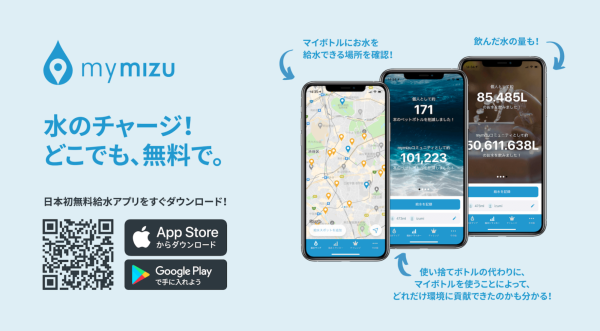
Mymizu is driving a cultural shift in Japan, encouraging people to accept free water as an aesthetic and responsible practice by using a water bottle, to reduce plastic waste, and fostering an environmentally sustainable life. Mymizu also produces its own water bottles that can be customized to facilitate the sustainable cycle, and are also BPA-free, meaning they don’t contain chemicals (Bisphenol) used in plastics to further stimulate environmental conservation.
The mymizu app allows users to take photos and upload feedback information on the refill location. This is what Mr. Lewis called “co-creation,” connecting with the community to keep a sustainability momentum.
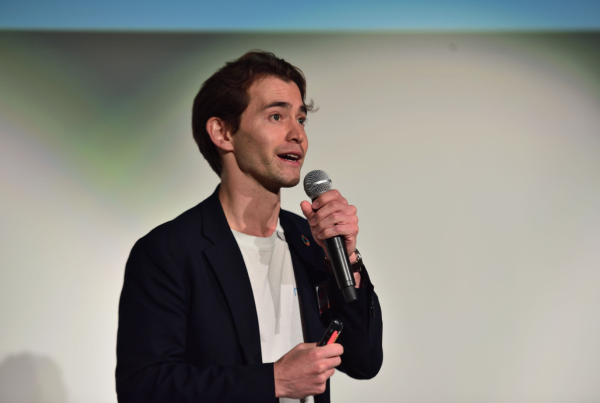
Mr. Lewis’s desire to start mymizu and to pursue a career in social entrepreneurship originated from the aftermath of the 2011 Great East Japan Earthquake. He volunteered to help his grandfather, a resident in the Tohoku area, which was vastly impacted by the earthquake and the intense tsunami. Mr. Lewis mentioned how this event became the “big reason that motivated [him] to get involved in response, disaster response, and led down this trajectory of doing initially humanitarian work, disaster management, disaster response.”
Mr. Lewis stresses the importance of mobilizing the community and the act of working together to address issues, “We have a very, very polarized society. I’m a big advocate of basically bringing people together. I spent a lot of my early career working in peacebuilding. Peacebuilding is just bringing people in the same room and listening to one another, rather than speaking.” He also added how enterprises can scale up through the “3.5% rule,” stating that “if you can engage 3.5% of a population in some kind of collective action, then you can almost always create a systems-level change in society.”
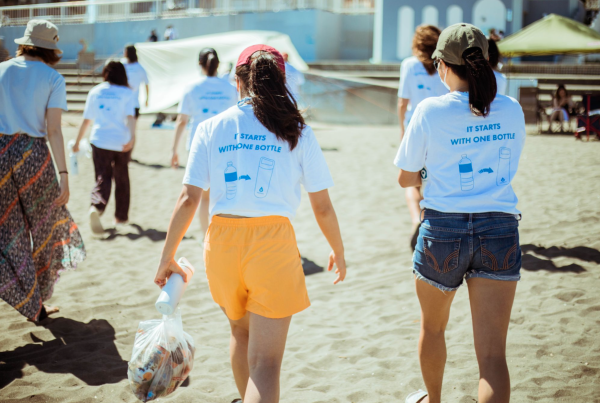
Credit: mymizu
Since its establishment in 2019, mymizu has grown rapidly. It holds a partnership with more than 2,500 cafes and restaurants and counts with more than 200,000 refill points across more than 50 nations. In 2021, mymizu ranked first in the health and fitness category on the App Store and placed in the top ten overall ranking. Furthermore, mymizu has won several awards in recent years, including the Good Life Award, the Ministry of the Environment, and the AWS Women Social Entrepreneur Award.
As mymizu further contributes to the environment and the well-being of society, Mr. Lewis emphasizes that while commercial companies are generally in pursuit of maximizing profits, social enterprises are in pursuit of maximizing social impact.


