


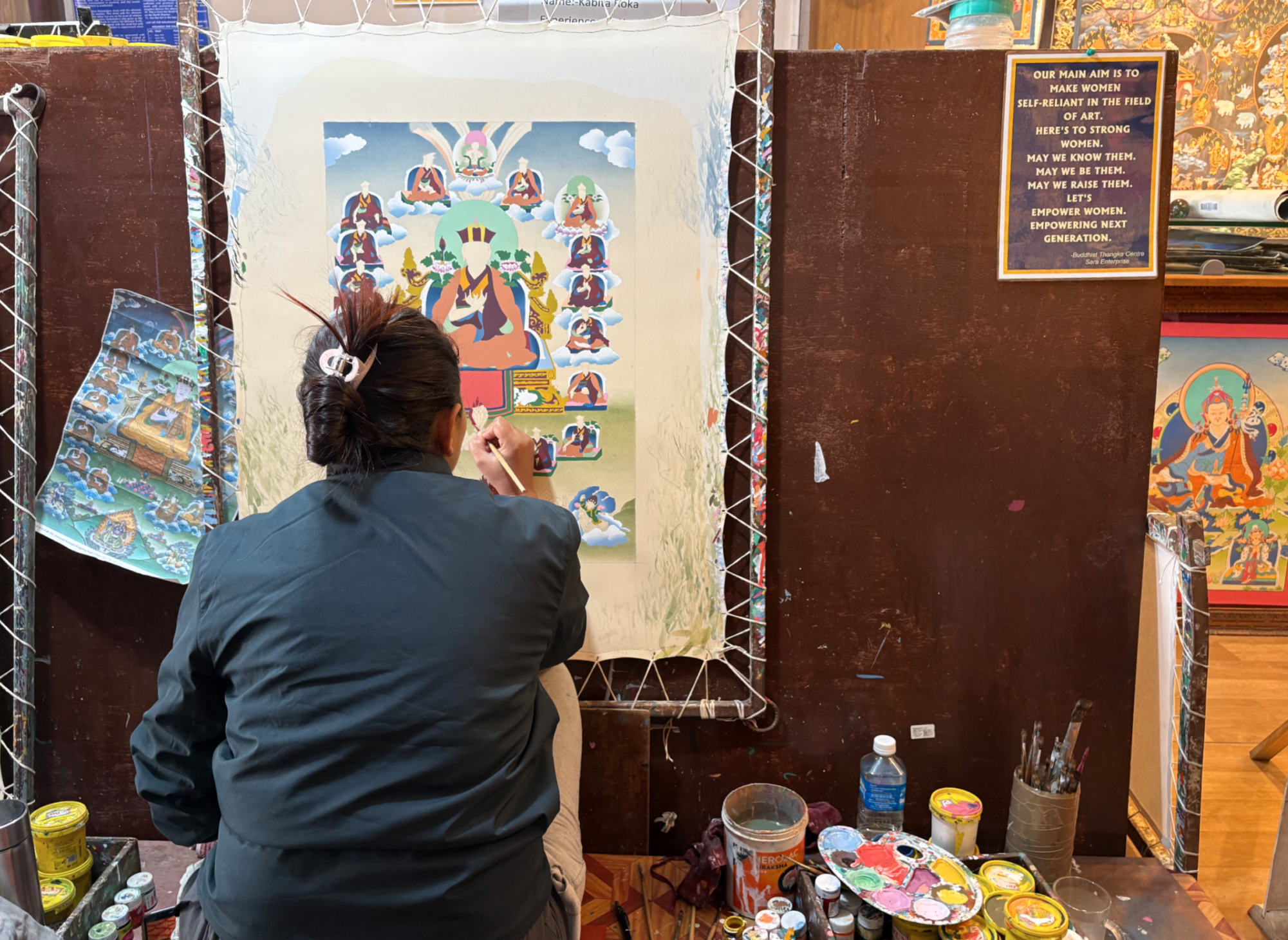
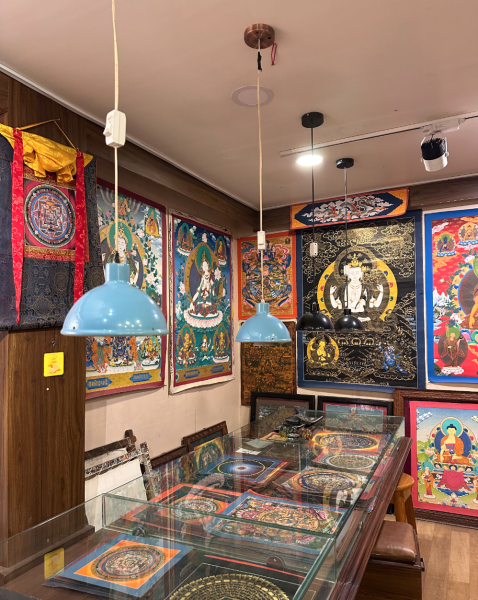
At the School of Thangka Art Painting in Kathmandu, ten women sit cross-legged on the floor, brushes in hand, delicately recreating traditional Buddhist mandalas. While all the women painters were focused, a poster on the wall caught my attention. The poster read its aim, “to make women self-reliant in the field of art, [empowering] women [and their] next generation.” This shop was not just a regular Buddhist mandala shop — it was a crucial platform that empowered all women who may not have completed secondary education.
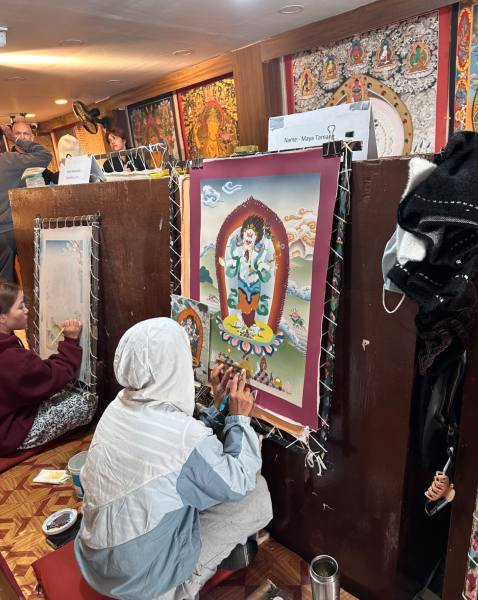
Maya Tamang is one of them. With two years of experience and two children to support, she entered the labor force without finishing high school. Then, she found this shop — a shop that granted her the opportunity to work even without formal education.
These programs exist because generations of women were left behind. Traditional views have prevented girls from staying at schools, leading to literacy rate gaps, especially in older generations — including Maya. In the early 2000s, the literacy rate was 60% for girls and 81% for boys.
Today, this gap has shrunk significantly: 89% for girls and 96% for boys. In contrast to the previous gap of 21%, the literacy rate gap is now 8%. Recent data has even shown that more girls are in schools than boys.
Opposing traditional views, the Nepali community has lately shifted to a more optimistic perspective, recognizing that women are crucial in building a future for Nepal.
However, this shift didn’t happen by accident — it came through deliberate investment in girls’ education. Organizations such as Nepal SEEDS, a nonprofit with which ISSH has partnered for over a decade, have contributed to achieving this goal. Nepal SEEDS is a nonprofit organization founded in 1998 to raise funds to support underserved rural communities in Nepal. With their continuous support, girls’ education has been improved in rural areas by focusing primarily on three categories: secondary education support, university access, and job opportunities.
Secondary Education
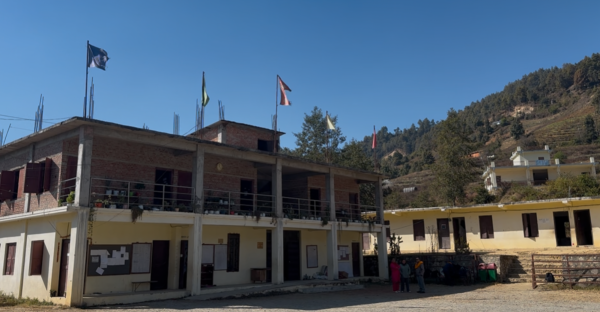
Kalika High School, a school with 276 students located in the rural mountain community of Kafleni, exemplifies this reality. For more than a decade, it has received support from Nepal SEEDS, including funding for essential facilities such as bathrooms and sanitation products. (link Yoshina’s article?)
Nepal’s education system is heavily exam-based, and students are assessed on standardized national exams. However, in this process of formal education, girls in particular face additional barriers: family responsibilities, social pressure for marriage, and expectations to take care of household chores rather than study.
In rural areas specifically, these pressures are particularly pronounced. According to a 2024 UNESCO report, 89% of students complete lower secondary education school while only 44% of girls and 53% of boys complete upper secondary education, indicating that around 45% of students drop out of school before high school.
On the other hand, as boys from rural communities leave for Kathmandu to gain access to better schools and job opportunities, girls are given the chance to take their place in the schools. With this newfound opportunity with the boys leaving for the capital city, the schools have become important spaces for reducing the gender gap in education and supporting girls who might otherwise be excluded from learning. This is exemplified by Kalika High School, which officially serves as a co-ed school, but the number of female students exceeds two-thirds of the student body.
Education at Kalika looks quite different from what many students experience elsewhere. In Grades 9 and 10, students focus on core academic subjects as they prepare for Nepal’s national exams, and some students leave Kafleni after completing the two grade levels to seek work in nearby cities.
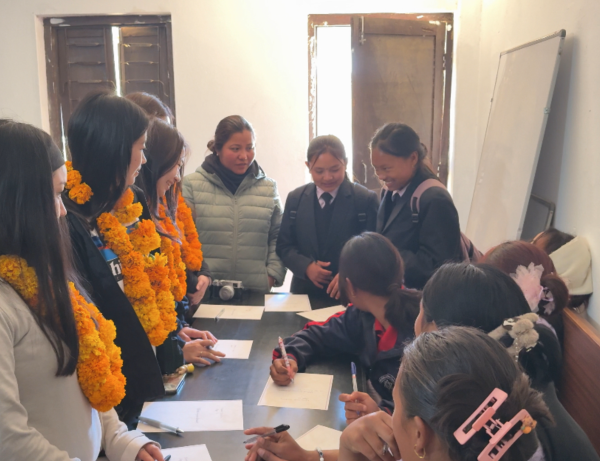
For students who choose to stay in school, the curriculum shifts towards agriculture, one of Nepal’s most popular occupations. Students learn agricultural techniques and are given opportunities to participate in exchange programs. In a country where 62% of the population works in agriculture, these skills provide girls with a stable future. As a result, these programs allow women to become financially independent.
Despite barriers to pursuing education, schools such as Kalika keep girls in education by creating curricula that prepare them for their desired occupations. This highlights the importance of their role in providing secondary education for girls in rural areas.
As education in Nepal continues to improve, some girls take advantage of opportunities beyond high school, thereby expanding the job opportunities they are offered.
Universities
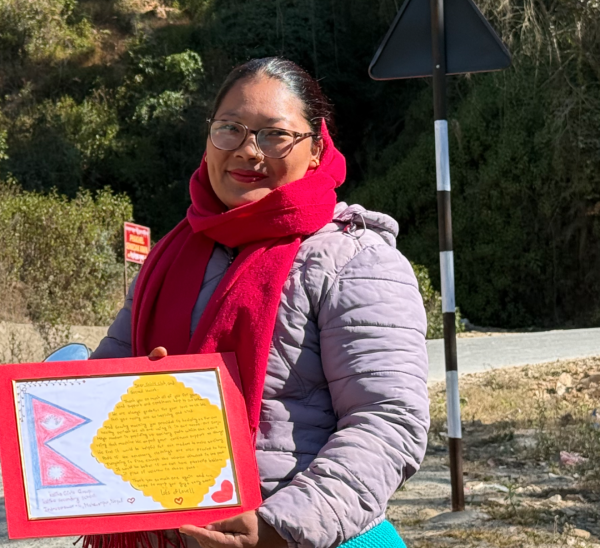
While some girls choose to stay in Nepal to work locally, others take a challenging course: studying abroad.
The principal of Kalika High School explains that once students achieve a required GPA and a certain exam score, they are given the opportunity to study abroad, such as in South Korea, with scholarships. High schools partner with organizations such as Nepal SEEDS to fund these students and give them a chance to make their dreams a reality.
As more and more girls travel abroad, they are given even more opportunities to gain a quality education. In Nepal, resources are limited, and the facilities, curriculum, and overall learning environment restrict what students can access and achieve. In contrast, studying abroad exposes students to more advanced resources, competitive academic programs, and a wide range of career paths. Therefore, exceptional students tend to strive to continue their education overseas.
While the goal of Nepal SEEDS is to invest in girls’ education, their ultimate aim is to grow and eventually give back to their communities in Nepal. KP expresses that after dedicating significant resources to these girls’ education, watching them leave is “the hardest part.” While he wishes for them to stay and “to give back to the community,” he also acknowledges that pursuing opportunities abroad may be better for their personal growth. In the end, he recognizes that he must “let them go” and support them as they begin a new chapter.
Job Opportunities
Men and women in Nepal claim that they have equal job opportunities. According to both KP and a teacher at Kalika High School, the law has no restrictions on women pursuing professions such as medicine, government, or business. However, in some communities where traditional perspectives are particularly pronounced, women are expected to prioritize marriage or household responsibilities over pursuing long-term careers. As a result, gender inequality in the workplace continues to exist.
This is where education is hopeful. Women with secondary education have more leverage in choosing professions of personal choice as they have the freedom to pursue professional training, delay marriages, and pursue careers outside manual work. KP notes that women in Nepal have already begun to succeed in fields that were once dominated by men, as they have female presidents, doctors, and lawyers. Although these cases are less common, they show the importance of flexible job opportunities that align with higher education.
Women who did not receive a secondary education rely on alternative paths. Programs focused on vocational training, especially in the arts, help provide women with opportunities to develop skills and support their families financially. The School of Thangka Art Painting, where Maya Tamang now works, is one of the many examples of how these programs can provide women with a chance to become more financially independent.
If Maya Tamang had not found the School of Thangka Art Painting, her options would have been limited. Stable employment would have been challenging to secure, leaving her with few ways to support her two children. Instead, she is financially independent as she earns a steady income through her work.
As younger generations of girls in Nepal gain greater access to education, the country moves closer to gender equality. This shift reflects a recognition that enhancing girls’ education strengthens both families and Nepal. While progress remains gradual, continued investment in education is expanding women’s choices, allowing more to pursue the paths they choose.


