
















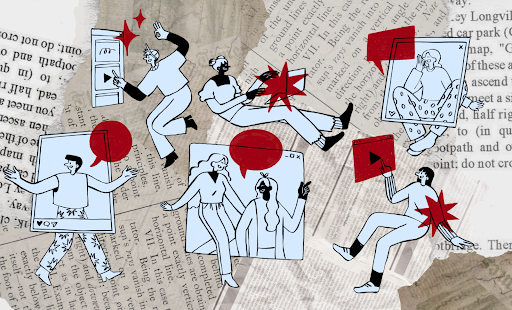

























What began as a digital murmur, scattered across hashtags and group chats, rapidly consolidated into a force capable of dismantling political authority. In Nepal, the government did not fall in silence. It collapsed in real time: watched, recorded, and accelerated by its own people. Within weeks, a generation that long navigated dysfunction quietly chose instead to confront it directly. What unfolded was not just political unrest, but a decisive shift in how power could be challenged—and by whom.
Nepal became the third Southeast Asian country in the 2020s to see its government overthrown by youth-led protests. In today’s world, political power seems almost monopolistic, and in response, people polarize more emotionally in support of their preferred political parties. Amid this global climate, Gen Z protesters in Nepal came together around a common goal, challenged the military and a corrupt government head-on, and ultimately won.
Nepal is no stranger to civic uprisings. From the People’s Movement of 2006, also known as Jana Andolan II, to frequent smaller-scale anti-corruption demonstrations over the past decade, public dissent has shaped policies— yet 2025 felt different. The movement was decentralized, digitally coordinated, and most significantly, youth-coordinated.
Underlying the unrest was persistent frustration with corruption. In 2025, Nepal ranked 109th out of 182 on the corruption perceptions index, with a score of 34/100 – the same score from 2019, and stagnating from its initial 35 score in 2024, according to Transparency International. This indicates alarming public-sector integrity, ranging from, but not limited to, embezzlement, bribery, nepotism, and high-level scandals.
——–
Six months later, the question facing Nepal is no longer how the protests unfolded, but whether the system the protestors challenged has truly begun to change. Although the success of a protest is usually measured by what it dismantles, sustained change is measured by what replaces it, and, more critically for Nepal, by the longevity of ensuring that the cycle of corruption never repeats.
From December 14 to 25, I visited Nepal as part of a ten-day service trip with the organization, Nepal SEEDS, where I spent time in Kathmandu before traveling to a camp in the rural village of Kafleni. By then, although the immediacy of the protests had faded, their presence had not.
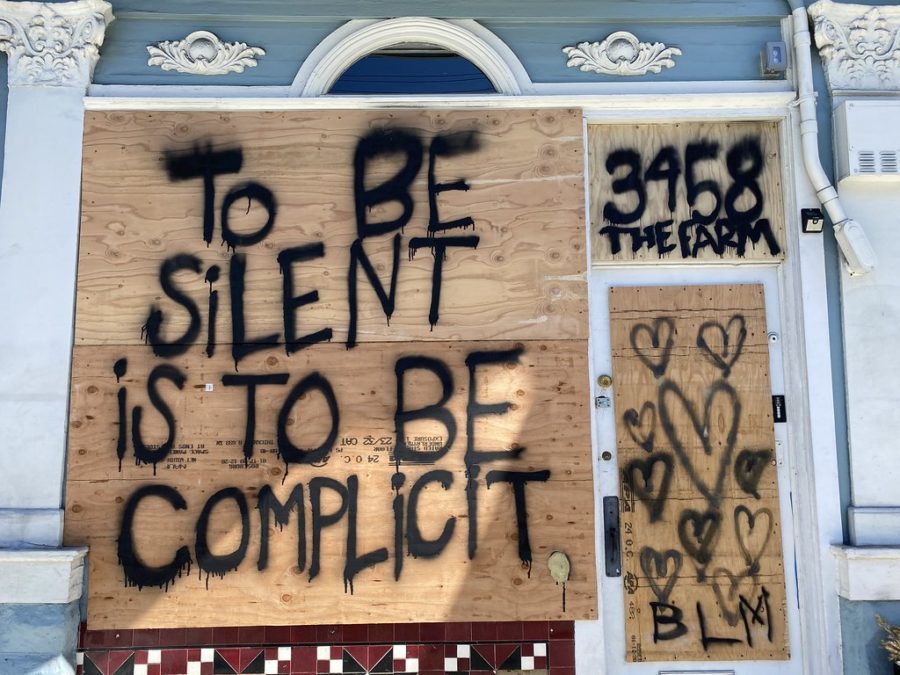
In Kathmandu, the aftermath remained etched into the city. Shattered storefront windows had yet to be replaced. Government gates stood marked with graffiti —fragments of slogans that had once unified thousands. For certain buildings, the blackened traces of fire still clung to building exteriors, subtle but unmistakable reminders of how close the unrest had come to daily life.
Although the protests were no longer unfolding, they were not fully ended either. They lingered — not as movement, but as imprint.
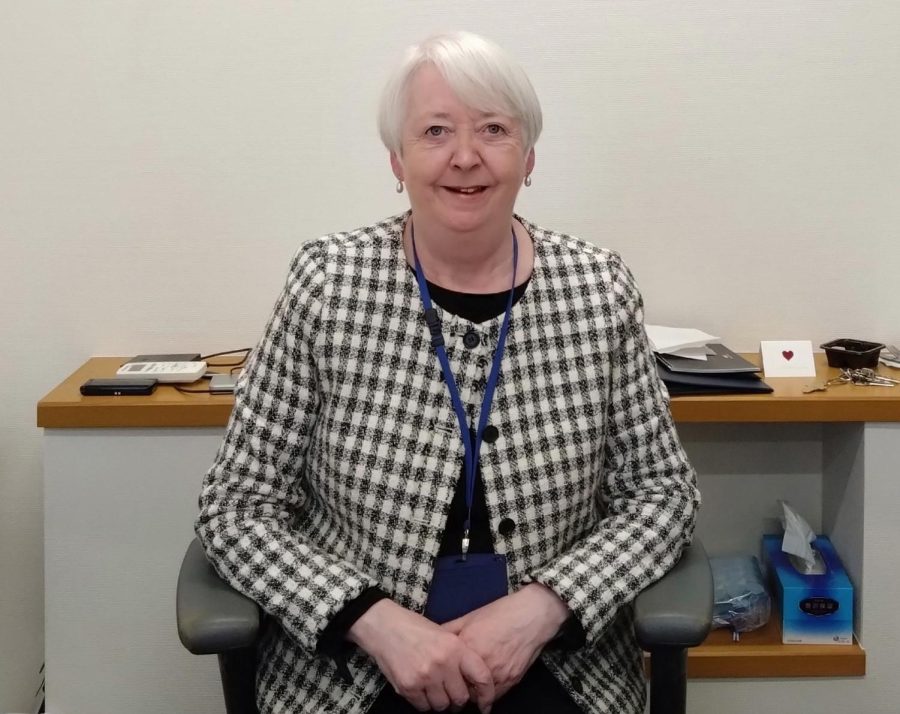
It was within this context that I spoke with KP Kafle, the founder of Nepal SEEDS, whose perspective offered a different lens on what comes after disruption. Unlike the voices that had filled the streets months earlier, his was measured, reflective, and grounded in long-term realities rather than rushed change. He explained how a good government requires more than outrage. It requires an “educated, good-hearted person to run the government.”
Yet, even the ideal he suggests is not simple. Leaders who are too idealistic, he argues, often struggle with the realities of a political system. Referring to figures like Jimmy Carter and the Dalai Lama, he reflects on how moral clarity alone does not always translate into effective governance. Politics, unlike philosophy or religion, demands negotiation, compromise, and, at times, contradiction.
In many ways, Mr. Kafle’s perspective reflects the deeper challenge facing Nepal now: choosing leadership is not just about integrity. It is about balance.
This tension became visible in the appointment of Sushila Karki, who emerged as a widely supported transitional figure in the aftermath of the protests. As Nepal’s first female Chief Justice, Karki had built a strong reputation for judicial independence and anti-corruption efforts during her tenure, most notably through her involvement in high-profile investigations that challenged political interference.
For many young protesters, her appeal lay in that reputation— she represented neutrality in a system long defined by partisanship. Yet her role also underscored the very dilemma K.P. described. Integrity alone does not resolve systemic complexities. Leadership, especially in moments of crisis such as the one Nepal is facing, requires navigating institutions that are themselves deeply entrenched.
To explain this, Mr. Kafle offers a metaphor that lingers: “Politicians have to move like an earthworm…you touch one side, it moves another side.”
This image is striking in its simplicity. Leadership, in his view, is not linear nor transparent— it is reactive, constantly adjusting to pressure from all directions. It cannot operate in absolutes. And yet, despite this complexity, something has undeniably shifted.
For many young Nepalis, the protests were not simply about resisting corruption: they were about redefining their future. For decades, one of Nepal’s most entrenched economic patterns has been outward migration. Young people leave, work abroad, and send remittances home, effectively sustaining families but not reshaping the system itself.
This generation is increasingly unwilling to accept this trajectory as inevitable.
They do not want to build lives elsewhere while maintaining a system they no longer believe in. They want to build something within Nepal—something functional, accountable, and most importantly, their own. The protests, in this sense, were not only an act of resilience but also an assertion of presence. A refusal to leave.
It is this very shift: from endurance to intention, that will define what happens next.
In the months following the protests, Nepal moved toward political reorganization, with new leadership emerging amid both optimism and skepticism. Local and national elections, conducted under heightened scrutiny, reflected a population eager for change but uncertain of its durability. Voter turnout remained high in urban centers like Kathmandu, signaling continued public engagement, particularly among younger voters who had been at the forefront of the protests.
That test is now unfolding in real time. On March 11 2026, Nepal concluded the counting period of the Nepalese general election. At the national level, the shift is already beginning to take shape under Prime Minister Balendra Shah, a 35-year-old former Kathmandu mayor whose rise was inseparable from the protest movement itself.
During his campaign, Shah positioned himself as an anti-establishment candidate, emphasizing three central priorities: reducing systemic corruption, improving urban governance and infrastructure in Kathmandu, and creating domestic opportunities to discourage youth outmigration. His message resonated with a generation that no longer views leaving Nepal as the default path to stability, but rather sees reform within the country as both necessary and possible.
In statements following the election, Shah reiterated a commitment to “systematic change, not symbolic change”, emphasizing that rebuilding public trust requires both institutional reform and visible accountability. His leadership has focused on digitizing municipal services, increasing transparency in public spending, and enforcing regulations that had long been ignored—early steps aimed at dismantling everyday corruption at the local level.
In his first weeks in office, Shah’s administration moved quickly to translate rhetoric into action, launching what Reuters described as one of the most extensive anti-corruption investigations in Nepal’s modern history, including a judicial panel tasked with examining the assets of current and former political leaders.
The urgency behind priorities is deeply generational. As analysts at the Carnegie Endowment note, years of corruption, instability, and unemployment had pushed many young Nepalis to leave the country entirely—making Shah’s leadership not just a political change, but a responsible looming demographic and economic crisis.
His influence has extended beyond city governance. As highlighted in the Time 100 Most Influential People 2026 list, Shah’s political ascent reflects a broader shift in Nepal’s political landscape: one driven less by ideology and more by public demand for competence, integrity, and results. His appeal lies not only in policy, but in what he represents— a leader shaped by the same frustrations that fueled the protest.
Yet his position also reveals the limits of electoral change. While supported by the public, the authority operates within a broader system still influenced by long-standing political networks and elite interests. Established power structures, often described as oligarchic, have not disappeared. Instead, they remain embedded within institutions, shaping policy and constraining reform from within.
As a result, trust in new leadership is uneven. For some, he represents possibility. For others, particularly those aligned with traditional political factions, he represents uncertainty—an untested figure navigating a system that has historically resisted disruption.
This tension raises a familiar but unresolved question: Can new leadership effectively operate within an old system, or will the system itself reshape the leader?
The protests proved that a generation is willing to challenge power, mobilize, and demand change on an unprecedented scale and with unprecedented visibility. But sustaining that change requires something far less visible—time, structure, and persistence.
The cycle the protesters sought to break has not yet disappeared; it has only been interrupted. Whether this moment becomes a turning point or another chapter in a repeating pattern depends not only on those in power but on whether the generation that demanded change can maintain the pressure to see it through. Because at its core, the movement was never only about the protest. It was about reclamation. As one protestor told the BBC, “We want our country back.”