











































“Very simple, not much variety,” says a Sacred Heart student, describing Tokyo’s fashion scene.
“Very anime-based and kawaii style,” says another.
Despite these two students’ vastly different interpretations of Tokyo’s fashion scene, both are incredibly valid. Japanese clothing retailers often center on two major (and very different) styles: extremely minimalist and extremely stylized. For many International School of the Sacred Heart students, these choices seem to be the only two.
A survey of sixteen International School of the Sacred Heart students provides more insight into these international student fashion frustrations, with respondents describing Tokyo’s clothing stores as:
- “Very simple, not much variety”
- “Very anime-based and kawaii style”
- “Very street fashion, or more cute types”
- “Uniqlo, very modest clothing”
- “Business attire”
On one side of the spectrum, responses including keywords such as “simple,” “not much variety,” “Uniqlo,” “modest,” and “business attire,” reflect Japan’s renowned minimalistic category of fashion. Japanese brands like Uniqlo and Muji have become known globally for their commitment to clean basics such as white t-shirts, khaki slacks, and blue jeans. While this modest category of Japanese fashion may be perfect for satisfying an understated, business-casual style, many Sacred Heart students feel that these stores don’t offer enough range.
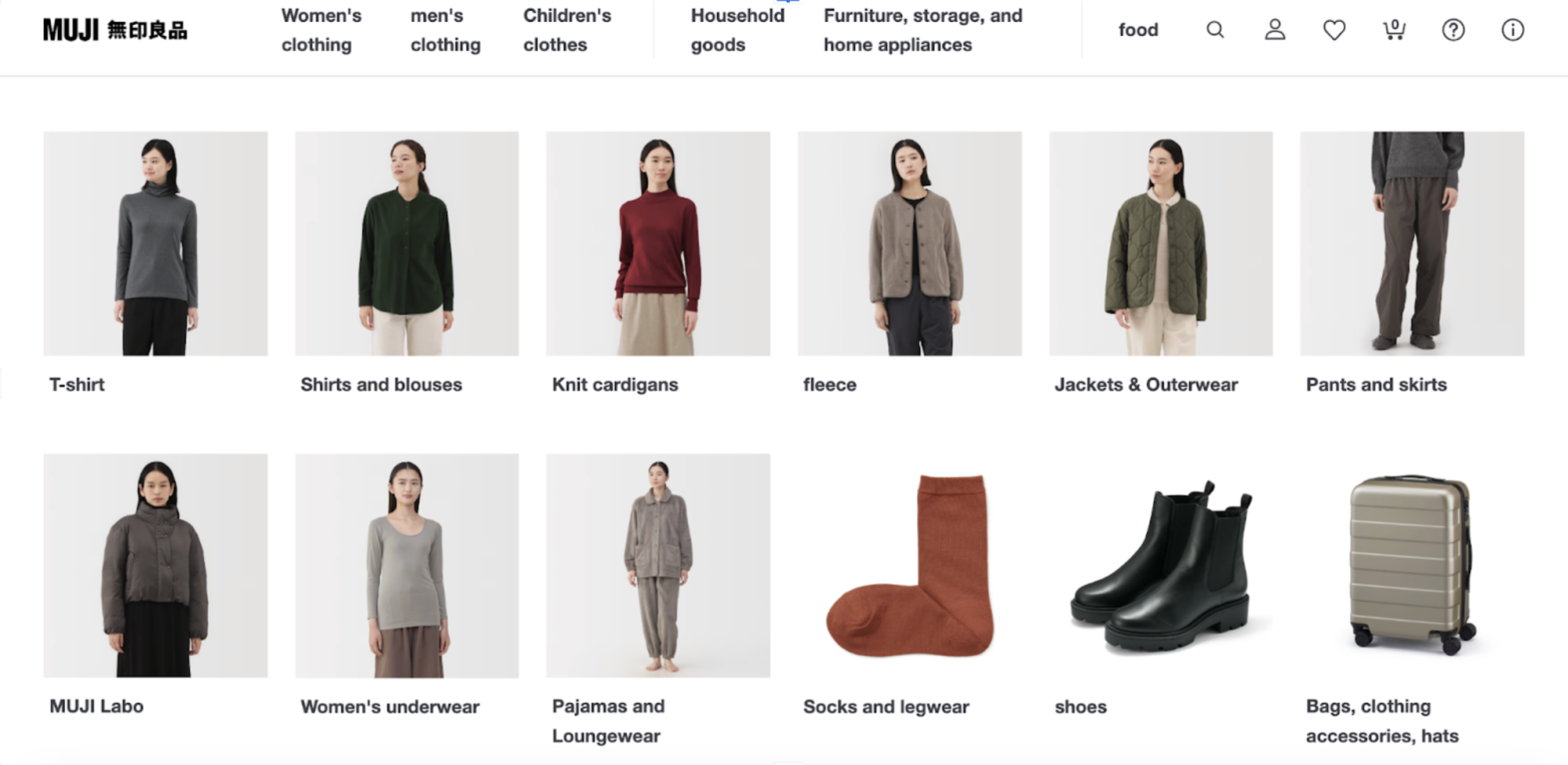
Credit: Screenshot from Muji’s website
On the completely opposite side of the spectrum is Tokyo’s street-style fashion, reinforced by respondents’ keywords including “anime-based,” “kawaii,” “street fashion,” and “cute.” Japan’s street-style stores, usually found in districts like Harajuku and Shibuya, are known for their dedication to the maximalist Japanese fashion aesthetic, such as Lolita (a Victorian-inspired style characterized by frills, bonnets, parasols, and bows) or Gyaru (a 2000s-inspired style characterized by rhinestones, animal prints, wedges, and chunky jewelry). While these clothing options definitely offer something more bold than the minimalism found in Uniqlo or Muji, many Sacred Heart students find these street stores to be over-stylized, meaning they lean too heavily into a single aesthetic. For teens who seek variety in their clothing without wanting to commit to a single distinctive look, these shops can feel inaccessible and limiting.
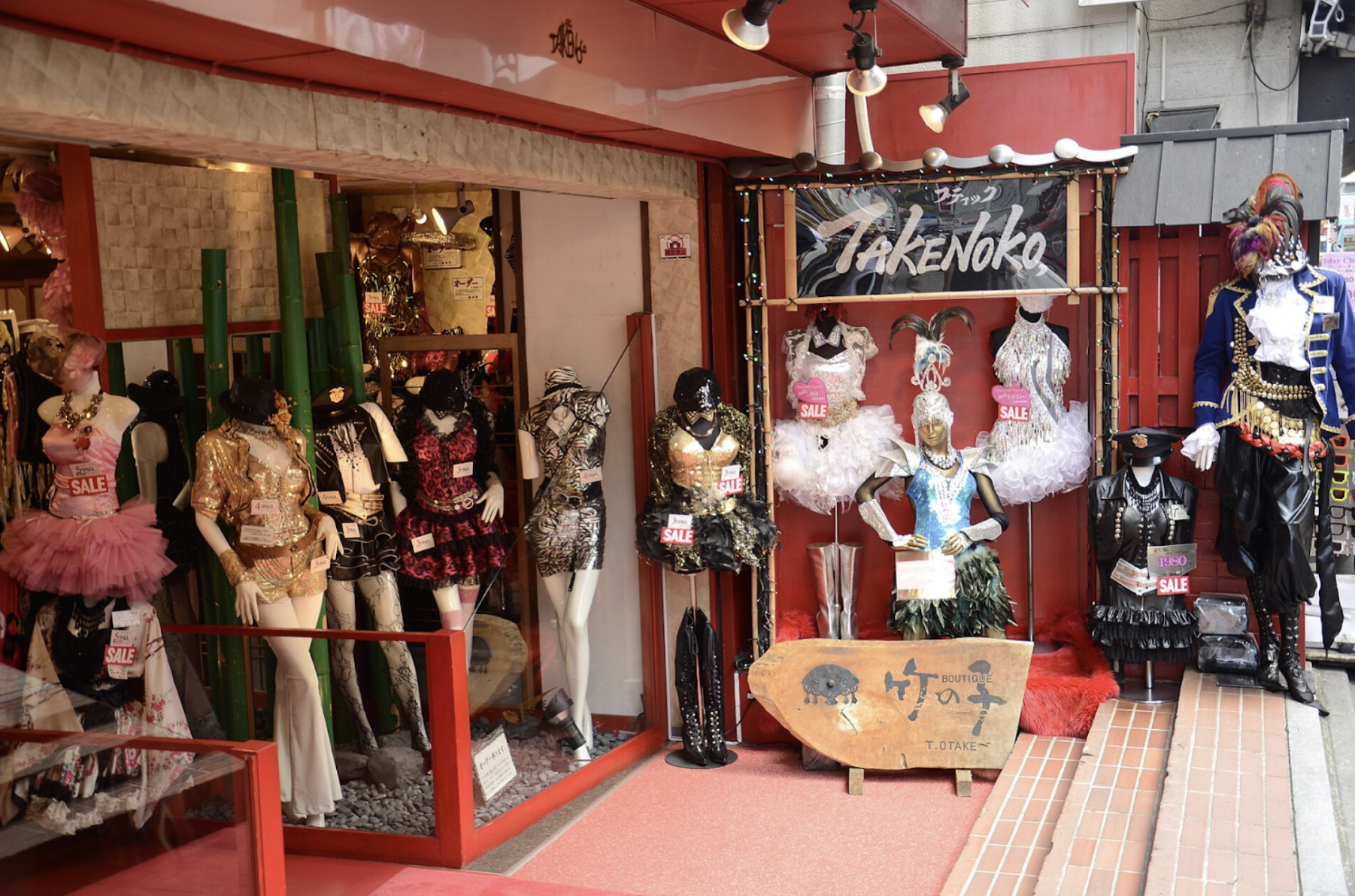
Credit: Stephen Kelly, Wikimedia
The limitation to these two extremes may help explain why the average rating Sacred Heart students gave to the question “How easy is it for you to find clothing that suits your style when shopping in Tokyo?” was a mere 2.56 out of 5.
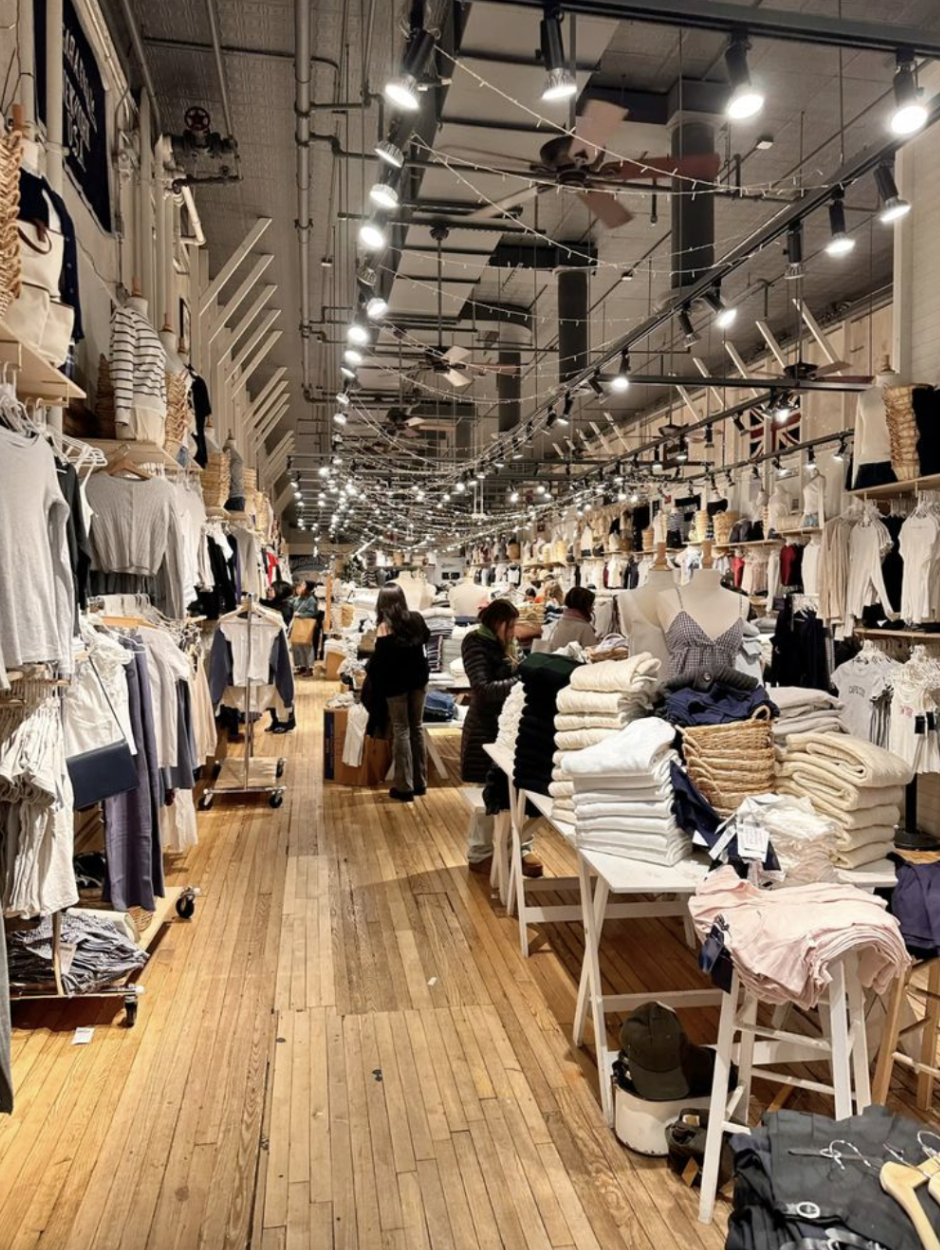
In the same survey, when respondents were asked which stores they do manage to find clothing they like in Tokyo, two names dominated the results: Brandy Melville and Hollister. Both of these brands fall into the distinctive category of “classic” Western teen fashion, catering to the variety of trendy styles that students struggle to find in Japanese brands.
While these two Western brands have retail locations in Tokyo and carry attractive clothing options catering to Sacred Heart students’ tastes, both stores pose accessibility challenges to shoppers. For example, Tokyo only has one Brandy Melville store, despite it being one of the most popular shopping locations amongst international teens. At peak times, such as weekends or holidays, the wait time to enter the store can exceed an hour. The store’s location is also approximately a 20-minute walk from the nearest station, making the trip more difficult and inconvenient than shopping elsewhere. Similarly, Hollister poses comparable accessibility challenges. Its one physical store in Japan is located in Odaiba, nearly a 40-minute commute from central Tokyo—and it is expected to close down soon.
Accessibility is a major part of the issue, but the survey also revealed that many Sacred Heart students feel the styles they want generally don’t exist in Japan at all. When survey respondents were asked what stores they wished existed in Japan, the #1 common answer was “Urban Outfitters” (a popular American retailer) and the #2 most common answer was simply “American brands.”
Respondents also shared the types of styles they wished existed in Japan, requesting:
- “More diverse styles in general”
- “More different styles and less of a focus on business clothing”
- “More fast fashion options”
- “More American/European style clothing”
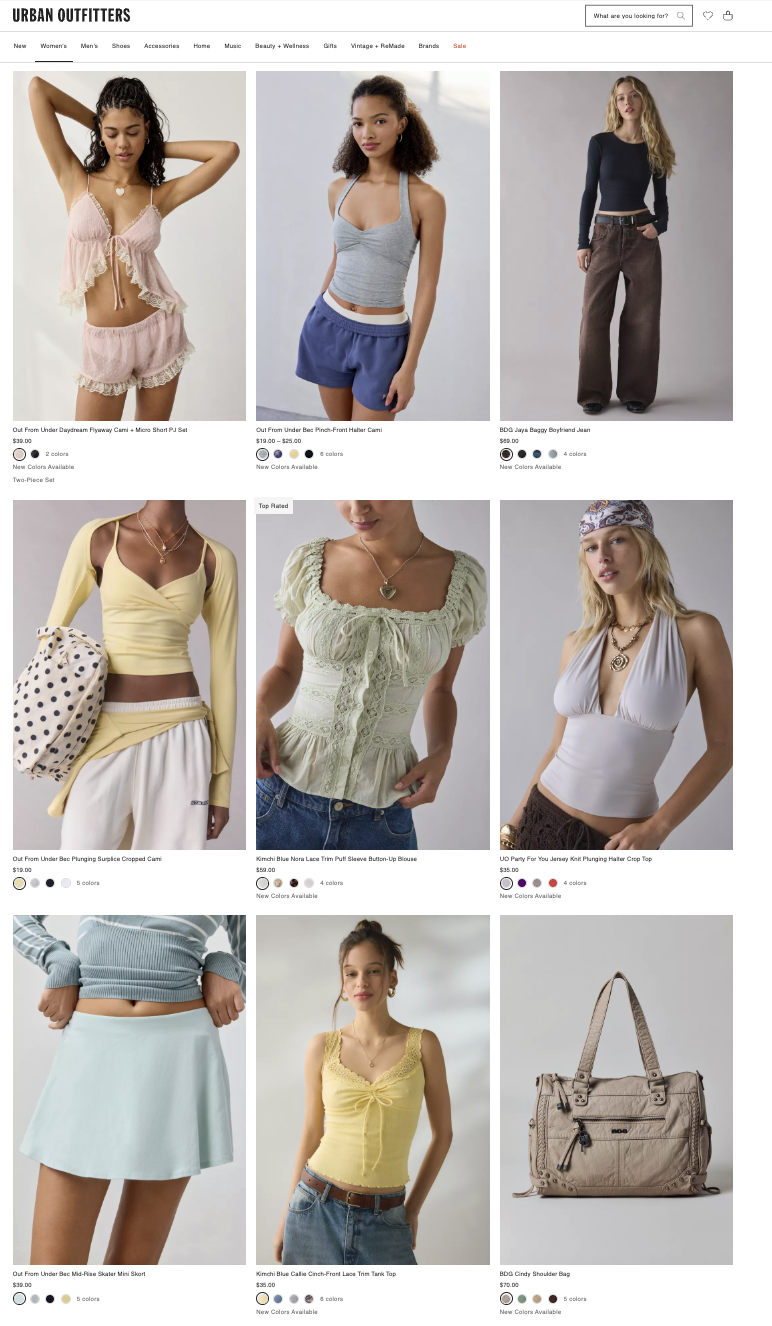
One of the major differences that sets Western retailers apart from Japanese retailers is their variety; they don’t limit themselves to just one aesthetic. While in Japan, it is standard practice for a store to carry just business-casual clothing or just street-style clothing, most Western retailers offer a wide range of fashion choices in-store. For example, Urban Outfitters—one of Sacred Heart students’ favorite American stores—carries everything from basics to Y2K to boho to athleisure. For teens, this wide range in selection lets them express themselves and experiment rather than confine themselves to one specific fashion category.
Credit: @lindseyaahowe on Pinterest
In addition to variety, Western teen brands are usually quick to adopt trends. Much of students’ fashion choices are inspired by viral looks on social media platforms such as TikTok or Pinterest. If cargo pants are trending online, Urban Outfitters, Hollister, Pacsun, or American Eagle will be among the first retailers to put this style on their racks. These American/Western brands move quickly with the fast-paced trends online, constantly updating their styles to match what is popular. Japanese stores, on the other hand, tend to stick to their own genres, meaning that new styles take much longer to appear. Especially for teenagers who consume social media and its “micro-trends” so rapidly, Western retailers feel a lot more in-line with what they want to purchase. One survey respondent noted: “I wish the fashion I usually see on Pinterest were sold here since they tend to reflect better on my style and overall fashion style.”
While Japan’s fashion scene currently lacks American retail presence, many Western brands have attempted to enter the Japanese market in the past. Most notably, American Eagle Outfitters (the parent company of American Eagle and Aerie) established various stores across Tokyo beginning in 2012. In preparation for their official launch into the local market, American Eagle Outfitters (AEO) partnered with Japanese firm Aoyama Trading Co. to begin Eagle Retailing, the joint venture managing AEO in Japan. While Eagle Retailing operated American Eagle and Aerie in Tokyo for years, Aoyama Trading Co. terminated their license with American Eagle Outfitters in December 2019 in an effort to shift the company’s focus to businesswear, closing all store locations nationally. This strategic move by Aoyama Trading Co. further reinforces Japan’s prioritization of businesswear and formal attire over the trendy, casual Western clothing offered by American Eagle Outfitters and other international brands.
Credit: jpellgen, Flickr
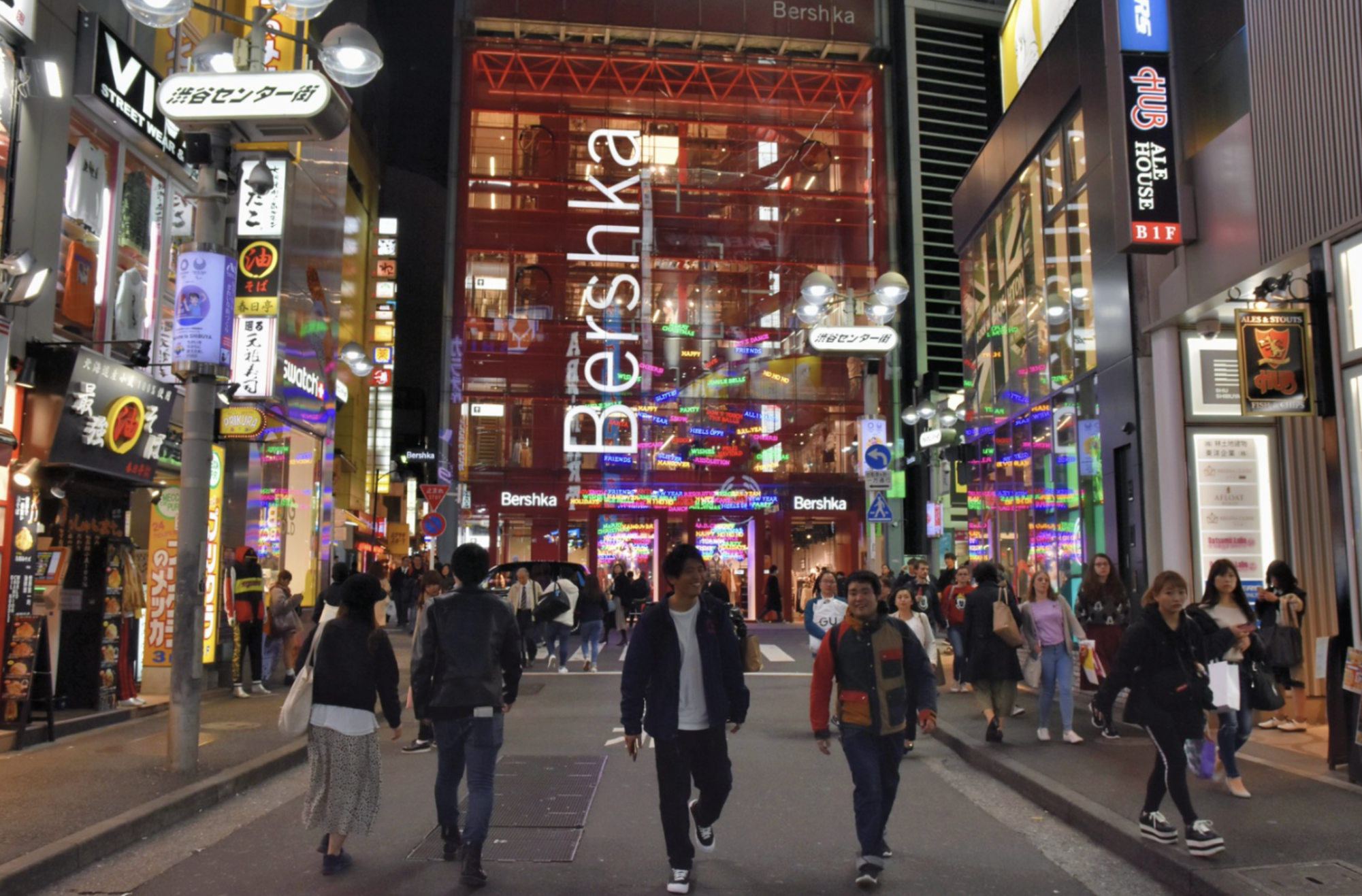
Another major Western brand that closed its doors in Japan recently is Bershka, a European fast-fashion retailer. Bershka’s eleven-story flagship store in Shibuya shut down in the summer of 2022, after over a decade of operation. Inditex, Bershka’s parent firm and the highest-earning European fast-fashion company of all time, closed all of its lowest-performing stores across the world in an effort to concentrate on more saturated markets as well as its e-commerce presence. In 2026, Inditex is set to open more Bershka stores in Europe, primarily Spain, as well as make its physical debut in the United States after expanding on a successful online presence. In a statement made to Inditex investors, García Maceiras, CEO of Inditex, noted that the company sees “significant long-term growth opportunities in the United States.” As Maceiras shows, Western teen brands like Bershka are more likely to succeed in American and European markets.
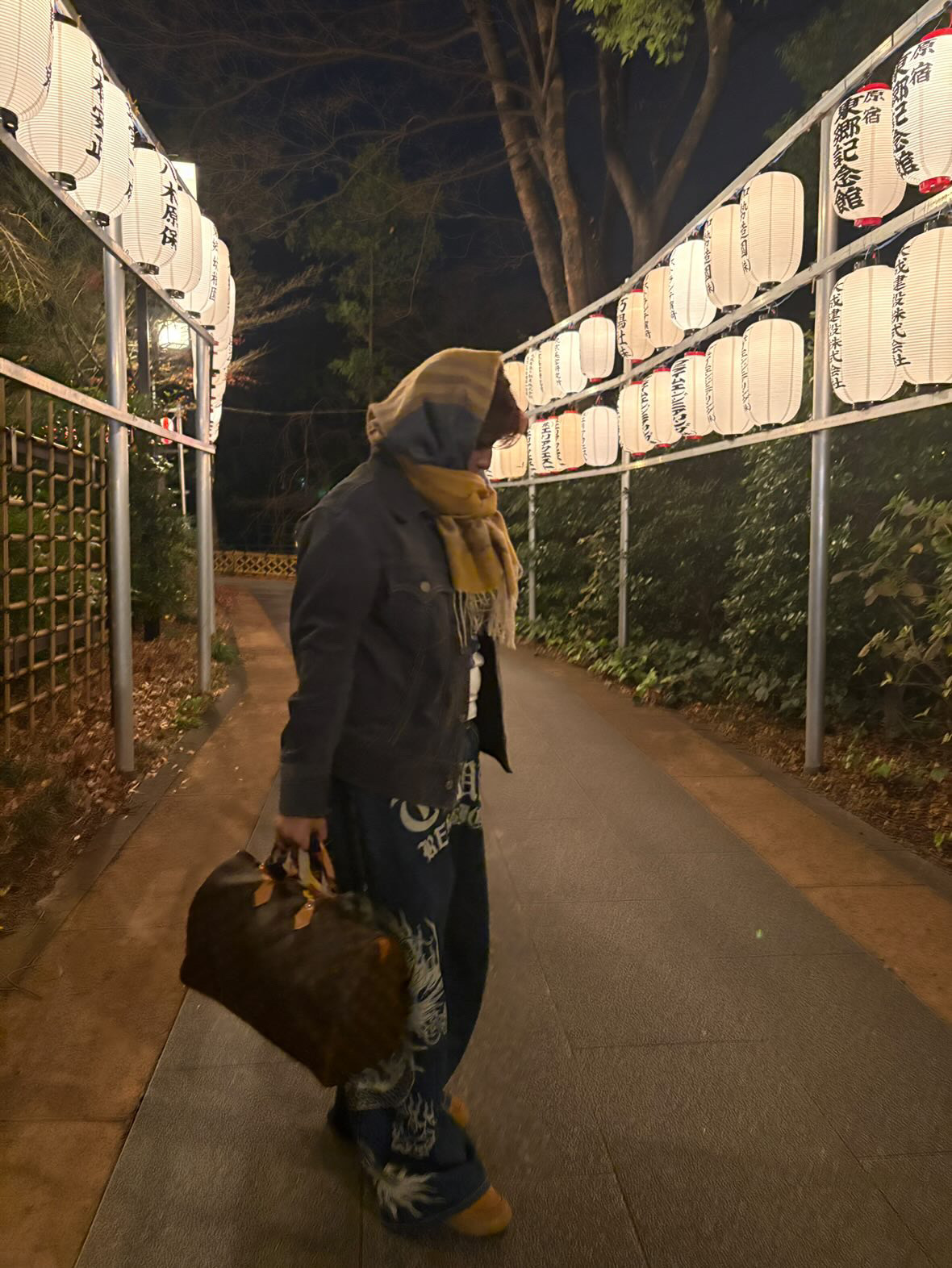
For students like Yena L. (‘28) who like to experiment with different clothing styles, Tokyo’s retail stores can feel limiting. Yena says that her clothes are almost exclusively thrifted, either at secondhand shops around Tokyo or through Mercari, Japan’s leading C2C (consumer-to-consumer) online marketplace. Yena describes her style as being “kind of all over the place.” She explains that, oftentimes, she can “change [her] style every month,” experimenting with colors, aesthetics, and designs whenever possible. “But I would say it’s more of like a grunge style,” she notes. “These days, I’m trying black and white and monochromatic colors.” With accessibility and variety posing challenges to in-store shopping in Japan, Yena and many other students have found that secondhand clothing is more suited to their needs. “For me, I think it’s too modern,” Yena says about Japanese retail stores. “They lean more towards simple styles, and I don’t really like that.” Whereas at thrift stores or on Mercari, Yena has an endless range of clothing options to choose from, at typical clothing stores, she is unable to easily find choices that suit her style.
Credit: Konatsu K. (’27)
Konatsu K. (‘27) is also a proud Mercari and thrifting enthusiast. She describes that in order to fulfill her own personal style, she maintains a mixture of retail shopping and secondhand shopping. “I would say my style is quite hybrid,” she says, explaining that she enjoys moving between calm and simple outfits as well as more experimental and bold outfits. Typically, to satisfy her simple, minimalist side, Konatsu shops in-store to find basic staple wardrobe pieces like plain jeans. “I do like getting things to layer there,” she explains about Japan’s retail stores. “Something subtle.” For more colorful pieces, she says that thrifting is the way to go. “My biggest take in fashion is color,” Konatsu adds. “Japan has a very minimalistic sense. Everyone is wearing beige, or navy, or gray.” To satisfy the more bold and colorful side of her style, Konatsu explores thrift stores or scours Mercari’s online storefronts. However, she does note that thrifting can have its drawbacks. “I can’t force it,” she says about finding cool fashion pieces secondhand. “When I go thrifting, I never know how much money to bring. Sometimes I spend 20,000 yen; sometimes, I find nothing.”
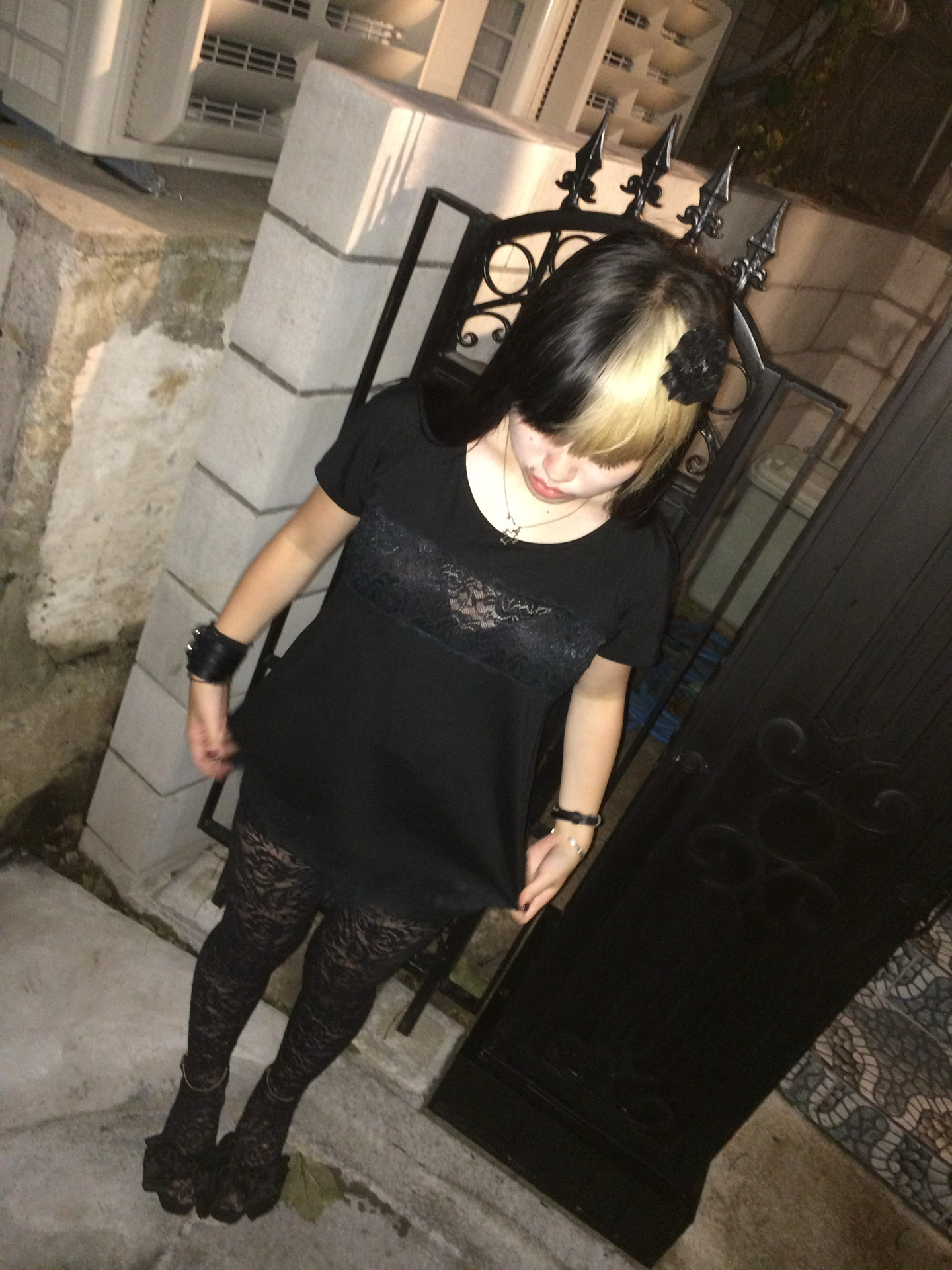
Credit: Arin H. (’26)
Arin H. (‘26) shares a similar perspective on pursuing her own personal style in Japan. “I’m stylistically very picky, so I wouldn’t find a lot of things that I would normally buy in retail stores,” she explains. “Mostly I’ll buy online.” Arin’s go-to place for shopping is also Mercari, where she is able to find a near-endless range of secondhand clothing and accessory options. “Or, if I want to shop-in person, I’ll go to Koenji. Over there, it’s basically just a bunch of really cheap thrift stores.” Although Arin occasionally shops at thrift stores in-person, she notes that many of these stores, especially in busy areas like Harajuku, have become overly crowded in recent years. “So for the most part, I’ll shop online on secondhand shopping apps like Mercari.” As for Japan’s retail stores, Arin finds that they usually don’t align with what she is looking for. “Japanese trends—it’s like American trends five years ago,” Arin explains. “Everything that’s in trend right now is super 2020 and 2021.” Contrary to retail stores in the United States, where shelves are stocked regularly to correspond with the latest trends, Japan is slightly slower to update.
Japan’s shopping scene may not provide exactly what every student at Sacred Heart is looking for. Until Japan’s retail industry expands its selection, Sacred Heart students will continue to search for alternative ways to maintain their personal style. While there is no singular solution that will cater to every student’s fashion taste, alternatives do indeed exist, as demonstrated by Yena, Konatsu, and Arin. Whether that means utilizing Mercari to shop for secondhand clothing, purchasing from Western brands’ online storefronts (albeit, with a hefty shipping fee), or even stocking up on clothes while traveling abroad, Sacred Heart students must find workarounds in order to achieve their own distinct look.