



















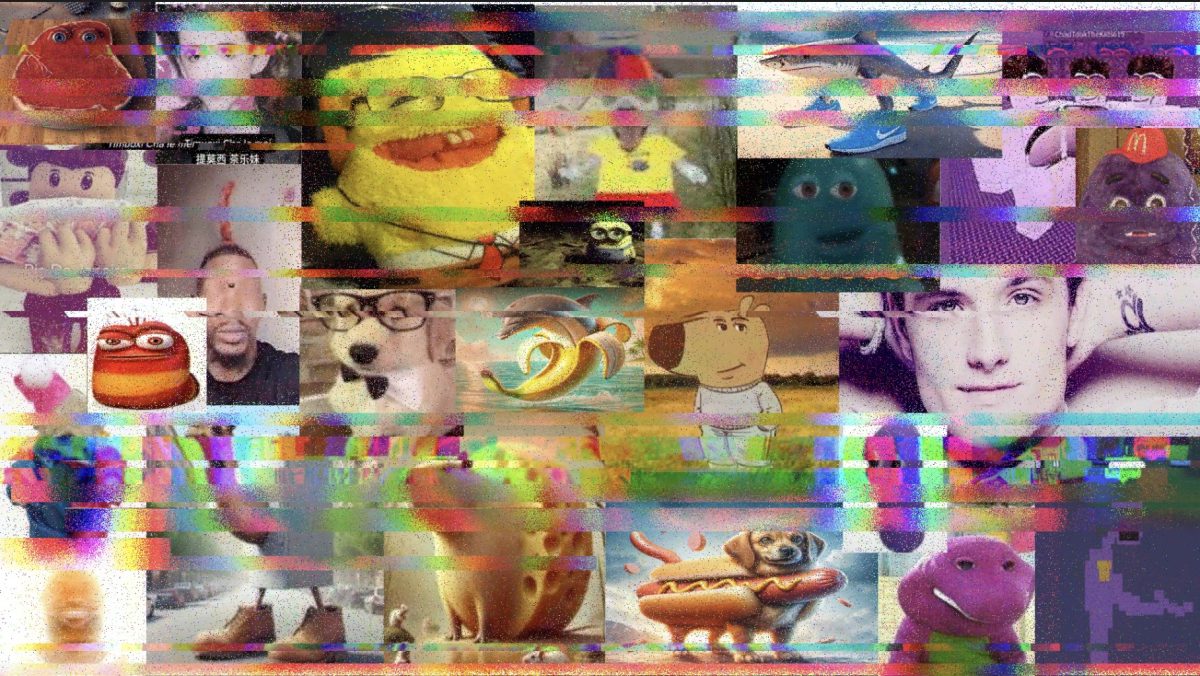


























Today, the internet is flooded with an eyebrow-raising, unprecedented wave of digital absurdity. From nonsensical jokes such as the viral ‘six-seven’ trend to chaotic, AI-generated imagery of fruits and Italian meme characters, surreal humor has completely hijacked youth culture. This has left perplexed individuals, whether they are part of the brainrot audience or not, asking a collective question: What is going on?
Seemingly foolish and meaningless, brainrot content is surging on the internet among the younger generations, from teenagers to even children below the age of 5, due to their quirky catchiness. Even though one might dismiss it as a cheesy joke among children, its impacts are beyond anyone’s imagination; it reaches everyone on the platform, the internet, and the world. As a matter of fact, this content, so-called “brainrot content”: fast, repetitive, chaotic media that spreads rapidly online, has officially been enlisted as the Oxford University Press’s 2024 Word of the Year.
A major problem with this content, though, is the fact that they do not leave our minds; they potentially “rot” them.
Flooding social media platforms, brainrot content shows up in almost every comment section, caption, and video on social media. Still, knowing that this content is neither educational nor beneficial to us is not enough to stop us from doomscrolling; fast-paced videos that make the least sense somehow feel impossible to stop. Often, we say things like “my brain is rotting” after a long session of consuming this brain-rotting content. But is that actually true? Is “brainrot” just a funny exaggeration, or could it reflect something real about how our brains are changing?
Before anything, it is important to understand what we mean by “brainrot.” The term is not a scientific diagnosis. Instead, it is a slang term for the feeling of mental fog, short attention span, and overstimulation that can come from consuming large amounts of repetitive or low-effort content. This often includes short videos, memes, and trends that prioritize quick entertainment over depth or meaning. The defining feature is not necessarily that the content is “bad,” but that it is fast, constant, and requires minimal thinking.
So, does “brainrot” content actually damage the brain? The short answer is no, our brains are not literally rotting. Our brains are not decaying or being physically harmed in the way the phrase suggests. Still, this does not mean there are no effects at all. What is happening is more subtle and has to do with how our brain adapts to what we repeatedly do.
Fortunately, the human brain is highly adaptable. This concept is known as neuroplasticity, which means the brain changes in response to experience. When we practice a skill, such as playing an instrument or solving math problems, the brain strengthens the connections associated with that activity. The same principle applies to how we consume media. For example, if you regularly engage with fast, constantly changing content, your brain becomes more accustomed to that pace. Though this may prevent one’s brain from “rotting”, it also brings a serious side effect in which one’s attention span is greatly affected.
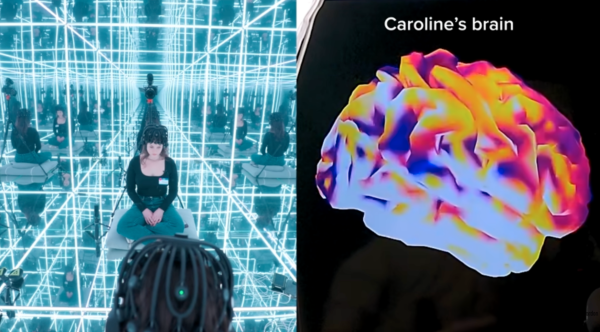
Recently, Jack Gordon, a content creator known for his science-themed videos, conducted an experiment with Intheon’s Neuropype software on the general crowd to see if there were relations between the amount of exposure to social media and the distracted brain waves. The results, obtained with the assistance of professionals such as research director Nicco Reggente, Ph.D., EEG analyst Ben Zhang, and task designer Mari Shahmanyan, weren’t as surprising. It is reported that those who had low hours of screen time showed the least distracted brain activity, as shown by blue color dominating most regions of the brain, while those who had high hours of screen time showed otherwise, with less blue shown on the brain. Though Jack Gordon has used this data to describe the level of “brainrot” among peers, he and the scientists acknowledged that these results were valid enough to explain the difference in the concentration and memory abilities of the brain, rather than the brain itself “rotting”.
Similarly, a student’s brain, after spending a lot of time scrolling through short videos, finds it harder to focus on slower tasks like reading, studying, or writing essays due to the elevated brain waves. While this does not mean their brains are damaged, it means their brains have adapted to expect frequent stimulation and quick rewards. When those rewards are absent, such as in a textbook or long lecture, the activity feels boring or difficult to sustain, making students tired and crave the intensity of brain-rotting content on social media repetitively.
Wikimedia Commons: Nour Aldin Kahlous
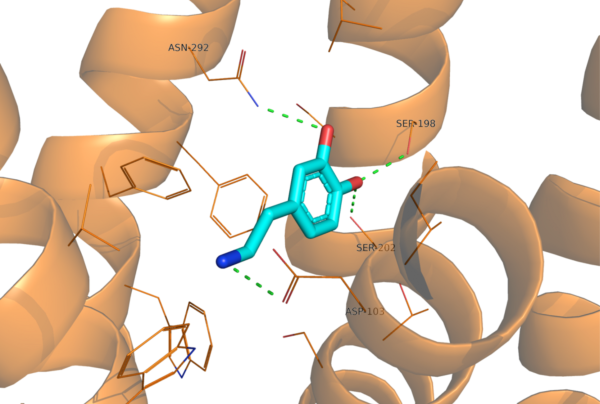
Another factor is dopamine, a brain chemical associated with motivation and reward. Every time we watch something entertaining, especially something short and instantly gratifying, our brain gets a small dopamine boost. Much like a slot machine, as Voinea describes in her article “Digital Slot Machines: Social Media Platforms as Attentional Scaffolds”, the endless and unpredictable stream of new content can create a variable reward pattern, which psychologists recognize as especially effective at reinforcing addictive behavior. Here, platforms are designed to keep delivering these boosts one after another to maintain their addictiveness. Over time, our brain may come to prefer quick hits of reward over activities that require effort but provide delayed satisfaction. In fact, this can lead to a constant loop where the more we rely on quick entertainment, the less appealing slower, more demanding tasks feel. Then we avoid those tasks and return to scrolling, reinforcing the pattern. Though this is not a literal brain damage, it is a habit loop that can adversely influence behavior and focus—a phenomenon that journalist Juho K. further investigates through the lens of her article “Can you read this in one go?” regarding sludge content’s effect on attention spans.
Additionally, sleep and mental fatigue also play a role. Most of us consume “brainrot” content late at night, sometimes losing track of time. This can reduce sleep quality or shorten sleep duration. Lack of sleep affects concentration, memory, and mood the next day. So, some of the “brainrot” feeling might actually come from being tired rather than from the content itself.
There is also a psychological aspect. When people say their brain is “rotting,” they are often expressing guilt or frustration. They might feel like they are wasting time or not being productive. This feeling can make the experience seem worse than it actually is. In reality, everyone needs downtime and entertainment. The issue arises when it starts interfering with responsibilities, goals, or well-being.
Wikimedia Commons: Ibrahim.ID
Granted, it is an overgeneralization to claim that all short-form and social media and addictive brainrot content ruins us. In fact, it is necessary to acknowledge that the internet is full of creative, funny, and even educational videos. These can inspire ideas, provide stress relief, and connect people across the world. Nonetheless, the core problem is not the existence of this content but the way it is consumed by our susceptible brains. Spending hours passively scrolling without breaks is very different from intentionally watching a few videos and then moving on to other regular activities.
So how can we, the generation of brainrot, manage to prevent such adversities without completely cutting off something we enjoy? According to digital health frameworks like those outlined by Stark Help Central, a highly effective approach is to be more intentional with our media consumption. Instead of opening an app automatically whenever you are bored, decide when and why you are using it. Setting time limits or taking breaks can help prevent long, unplanned scrolling sessions. Even small changes, like putting your phone away while studying or before bed, can make a noticeable difference.
Another helpful strategy is to balance fast content with slower activities. Reading a book, writing, having conversations, or even watching longer videos can help retrain your attention span. Think of it like exercising different parts of your brain. Just as your body benefits from a variety of movements, your brain benefits from a variety of mental activities.
To add a personal suggestion, it is also useful to notice how you feel before and after consuming content. Do you feel relaxed and entertained, or drained and distracted? Paying attention to this can help you make better choices about what to watch and how much to watch. Not all content has the same effect, and you might find that certain types are more enjoyable and less overwhelming than others.
In the end, “brainrot” is more of a cultural joke than a medical reality, but it points to something worth paying attention to. The way we use technology can shape our habits, attention, and daily experiences. While your brain is not literally rotting, it is constantly adapting. That means you have more control than you might think.
So, does brainrot actually rot your brain? Not literally. However, dismissing it as just a harmless joke would overlook how constant exposure to fast, rewarding content can shape our habits, attention, and daily behavior. The real issue is not the existence of brainrot content itself, but our digital habits, level of self-regulation, and recognition of addiction.
The same technology that teaches a student calculus in sixty seconds can also trap that student in two hours of mindless scrolling. What matters is not only what we consume, but whether we remain in control of our consumption. Because our brains are constantly adapting, what we repeatedly watch can influence what we find engaging, rewarding, or difficult to focus on.
In the end, brainrot may be more cultural slang than medical reality, but it raises an important question in today’s digital world: are we mindfully using technology, or simply letting it take over our minds?