
Recently, you might have encountered a new genre of social media post alongside the usual videos containing Italian brainrot characters and carefully curated photos of the new viral food – posts about “wasians” and dubbing 2026 “the Year of the Wasian.”
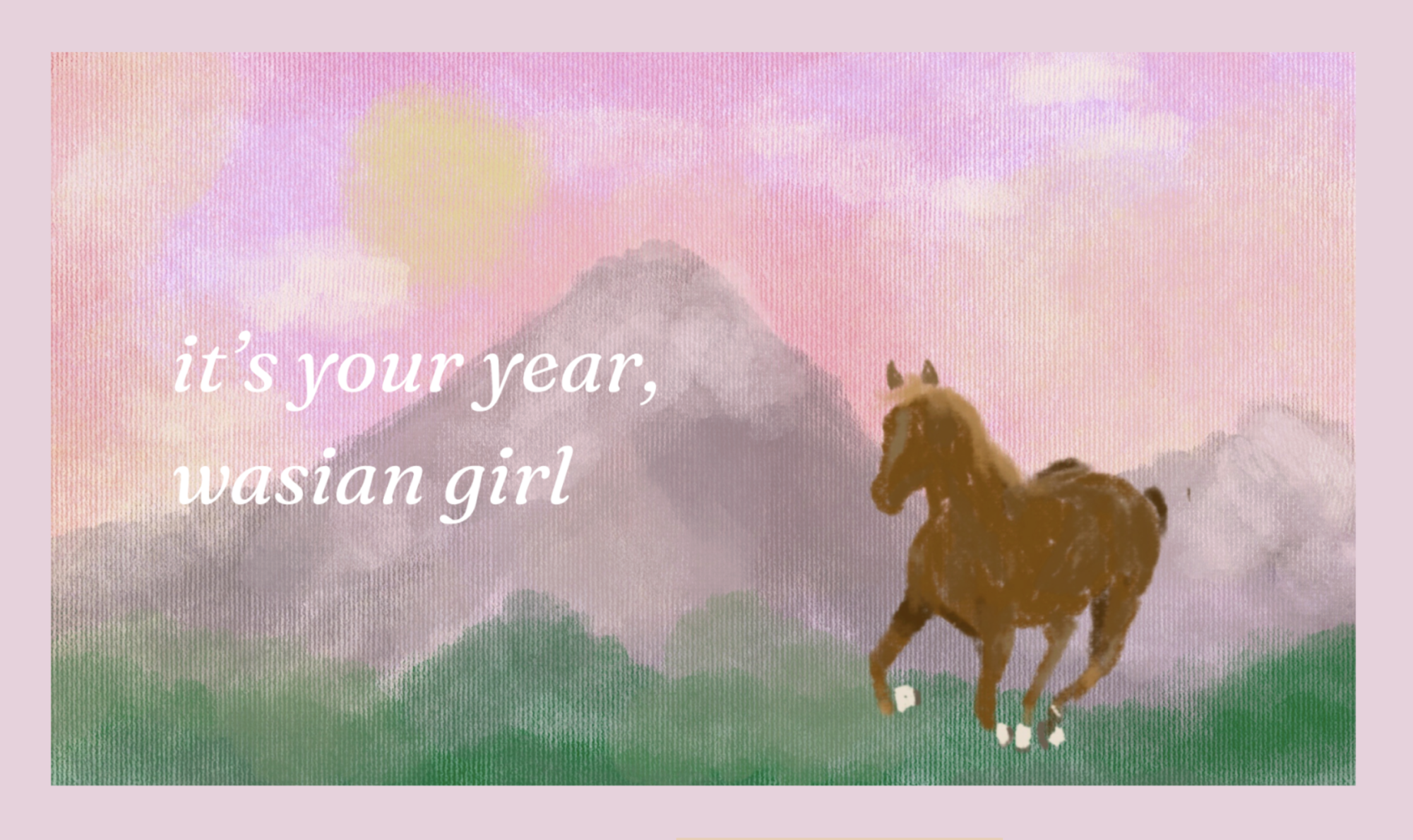
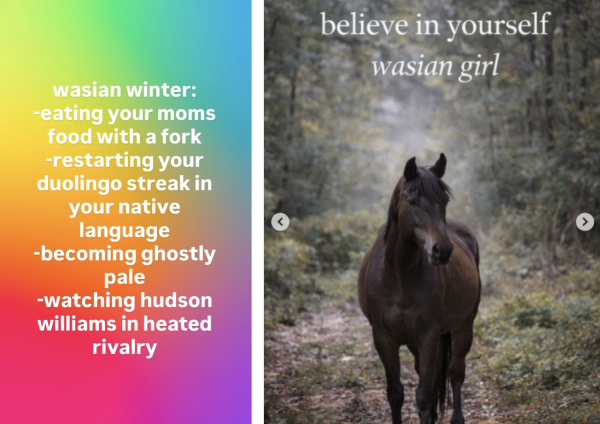
This kind of content can be found across different platforms in many forms: nestled among image carousels and in short-form videos, plastered in a serif font over a picture of running horses or stamped over the default Instagram textpost gradient background.
“Wasian” is a slang term that describes individuals who are biracial – Asian and Caucasian – derived from combining the words “white” and “Asian.” Although those with Asian-white mixed race ancestry have existed for centuries – as have words that describe them – the label “wasian” is a modern phenomenon, having gained its prominence online. The earliest definitions of wasian on Urban Dictionary date to the 2000s.
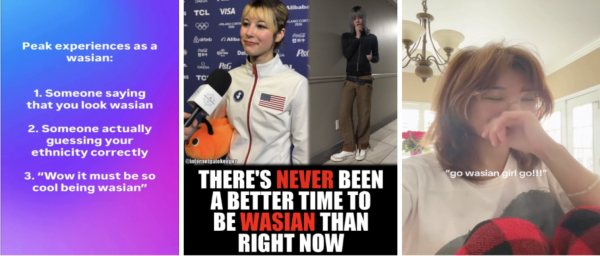
The phrase “Year of the Wasian” is a play on the Chinese zodiac, in which every year is given a moniker based on that year’s corresponding animal zodiac sign – 2026, for example, is the Year of the Fire Horse. “Year of the Wasian,” however, doesn’t have any astrological connotations, and instead forecasts and promotes wasian prominence over the next year.
The “Year of the Wasian” and all the content that has emerged from it can be difficult to explain, and the content tends to lean abstract. A notable example that often leaves outsiders confused is how social media users have made new subcategories of “Wasian”: uppercase W- “Wasian” and capital A-“wAsian,” meaning a mixed wasian with predominantly Eurocentric features and a wasian with predominantly Asian features, respectively.
Despite the specific vernacular and niche references, this type of content has continued to emerge and is growing ever more popular – likely as a result of the growing number of popular young wasian celebrities.
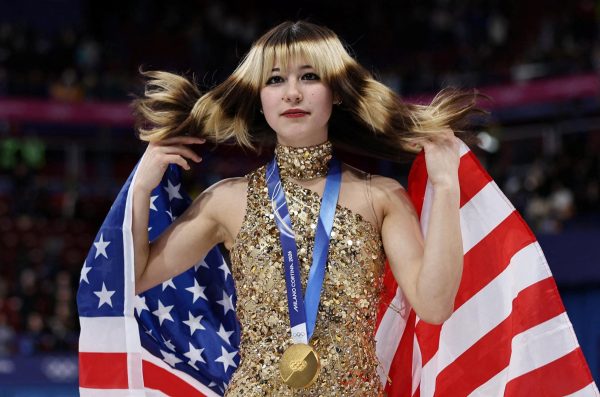
Lina P. (‘28), a wasian student at ISSH, wrote that she began seeing content relating to the “Year of the Wasian” this February, noting that it “came up especially following Alysa Liu’s performance in the Olympics.” Another wasian student, a senior at ISSH, began seeing this type of content even earlier – in January – and made the association between “Year of the Wasian content” and “the rise of wasian celebrities like Megan [Skiendiel] from Katseye and Hudson Williams from Heated Rivalry.”
These wasian celebrities have become household names recently, in part due to the online virality of Liu’s high-scoring figure skating performances at the 2026 Winter Olympics, Skiendiel as a member of the global pop group, KATSEYE, and Williams’ performance in the hit television series Heated Rivalry, respectively.
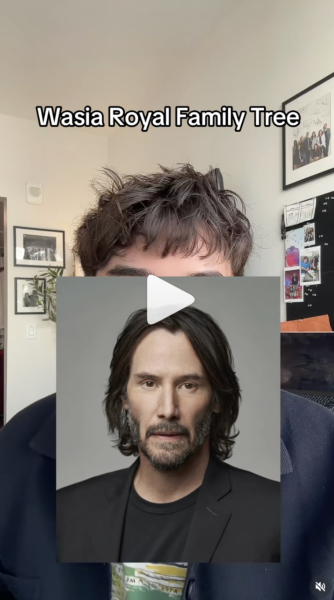
The impact that the “Year of the Wasian” has had on the wasian students we spoke to has undeniably been positive. For Kaede R. (‘27, Seisen), her favorite “Year of the Wasian” subculture is the kingdom of Wasia, a fictional place where the population and royalty are composed of various (often famous) wasians. Though slightly bizarre, Kaede says the comedic videos bring her joy. Lina, who describes herself as “someone who doesn’t keep up with athletes,” said that, in particular, her shared wasian heritage with Eileen Gu helped her to learn about the winter sports world.
Of the students we interviewed, the most common throughline seemed to be that the trend made them feel represented and helped foster a wasian community. “I also think it’s empowering to see wasian role models become more prominent, especially for young wasians (like my sister) who have more people to look up to,” says Lina P. “In my daily life, I have connected with fellow wasians at school through [this] humor.” The wasian senior at ISSH shared similar sentiments: “As a wasian, it’s nice seeing so many celebrities rise to fame who are similar to me […] I definitely feel more represented.”
However, that’s not to say that there weren’t some concerns: Kaede is concerned that the representation might be ephemeral. Describing the “Year of the Wasian” as “similar to a micro-trend,” Kaede predicts that “this representation will be lost quite easily.” Lina noted that the name conveys a specific time span, saying the trend seems to “promot[e] wasian visibility while simultaneously acknowledging that the recognition is a temporary trend.”
For the time being, wasians are still ruling social media – we hope that fun, edited montages and shortform clips of our favorite wasian celebrities and the silly jokes that help us connect with our fellows will continue even after we welcome 2027.