




On October 30, 2025, President Donald Trump announced on his social media platform, Truth Social, that he would be “instruct[ing] the Department of War to start testing [the] nuclear weapons on an equal basis. That process will begin immediately” to act as a deterrent to Russia’s potential use of nuclear weapons.
This statement by President Trump has drawn global attention to nuclear weapons. Peace advocacy groups and multilateral organizations have helped prevent nuclear conflict for 80 years, yet the danger remains. With the ongoing war between Russia and Ukraine, the nuclear risk is heightened once again. Nuclear proliferation and weaponry expenditure are evident from the 9.4% increase in global military spending in 2024, which is the highest funding recorded by the Stockholm International Peace Research Institute (SIPRI). China, a major nuclear power, has reportedly expanded its stockpile of nuclear warheads at a faster rate than any other nation, as reported by The Guardian.
According to the New York Times, if the US resumes nuclear testing, it will be the first time in 30 years, incentivising other countries to do the same. Other countries that do not possess nuclear weapons may incite them towards becoming nuclear proliferators.
South Korea, despite its longstanding stance on disarmament, is gradually shifting towards adopting nuclear weapons. Public polls have often shown 70% support for the development of nuclear weapons. South Korea has continuously relied on the U.S. nuclear umbrella; however, the frequent missile launches from North Korea have led its citizens to feel the necessity of building their own nuclear defense arsenal.
This is not limited to South Korea. It has become an emerging issue in Japan, the first and only nation to experience the atomic bomb in warfare. In August 2025, a far-right political party, Sanseito, unexpectedly won 7 of the 50 parliamentary seats in the House of Councilors election. The party’s phenomenal victory centered on its “Japanese First” slogan, based on protectionist policies. Sanseito’s political campaign included the implementation of nuclear weapons in Japan. Sayaka Shioiri, a senior member of the Sanseito party, known for her provocative statements, said, “Nuclear weapons are one of the cheapest and yet strongest methods of national defense.” Despite her controversial stance, she successfully won an electoral district in Tokyo. The party also won the electoral district of Hiroshima, the site of the first atomic bomb.
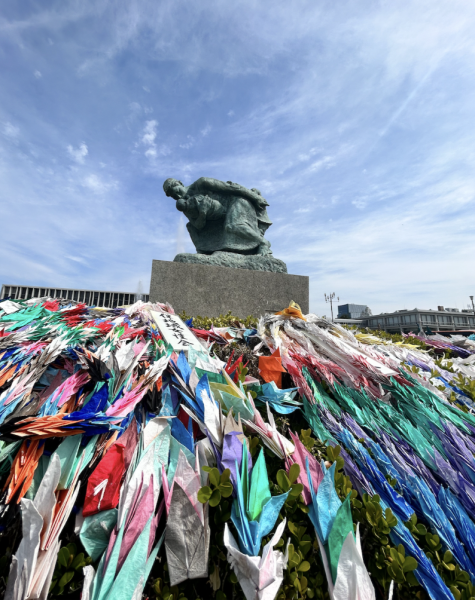
2025 marks the 80th anniversary of the Hiroshima and Nagasaki bombings. Former Prime Minister of Japan, Shigeru Ishiba, and world leaders attended a peace ceremony in Hiroshima on August 6 to commemorate the victims and to promote peace.
Global conflicts are impacting those who survived the devastating experience of the atomic bomb. Nihon Hidankyo, an organization formed by hibakusha—survivors of the A-bomb at Hiroshima and Nagasaki—has continuously contributed to the awareness of the dangers regarding nuclear proliferation. Their prolonged efforts have been recognized by winning the Nobel Peace Prize last year, highlighting their devastating experience and promoting the elimination of nuclear weapons worldwide.
In 2017, Hidankyo submitted approximately 3 million signatures to the United Nations, which contributed to the implementation of the Treaty on the Prohibition of Nuclear Weapons (TPNW). Hidankyo has continued its efforts even after serving as a key negotiator for the establishment of the treaty. Even to this day, Hidankyo submits signatures representing the “hibakusha,” requesting all countries to join the treaty.
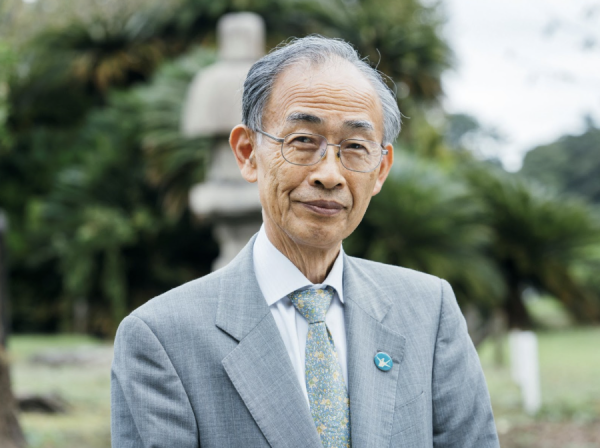
Credit: Nihon Hidankyo
Hidankyo has been very concerned about the resurgence of nuclear proliferation. The Deputy Secretary General of Hidankyo, Jiro Hamasumi, an atomic bomb survivor of Hiroshima, has conveyed his anxieties about the escalating wars and conflicts. Observing the Russia-Ukraine war as well as the conflict in the Gaza Strip as a hibakusha, he said in an email, “The risk of a nuclear war has grown, and it appears that the Treaty on the Non-Proliferation of Nuclear Weapons (NPT)—based on the three pillars of non-proliferation, disarmament, and peaceful use of nuclear energy—has completely become ineffective.”
Mr. Hamasumi, who visited the United Nations Headquarters in 2018, has also submitted 8,300,430 signatures as a representative of Hidankyo, aspiring for a world without any nuclear weapons. The current situation frustrates the hibakusha, as Mr. Hamasumi said in an email, “Survivors have continuously appealed: ‘Do not create any more hibakusha.’ They demand the abolition of nuclear weapons and that the state take responsibility for the harm it may cause. Survivors feel deep frustration toward nuclear-armed states. As the world’s only country to have suffered wartime nuclear attacks, Japan should take the lead in guiding the world toward the abolition of nuclear weapons.”
Keiko Ogura, a founder of Hiroshima Interpreters for Peace (HIP), a hibakusha at the age of eight in Hiroshima, has likewise expressed her fears over the current geopolitical climate. “I am truly frightened. Japan is now moving towards strengthening its military, and South Korea is considering building nuclear submarines. When I read the newspapers, I see people saying Japan must also become militarily stronger because the surrounding countries are arming themselves. For Japan, the nation that renounced war in Article 9 of its Constitution. I feel deep anxiety over these developments. Every day feels tense and uncertain. Whenever I look at the news, social media, or television, I wonder if I have ever felt this fear before.”
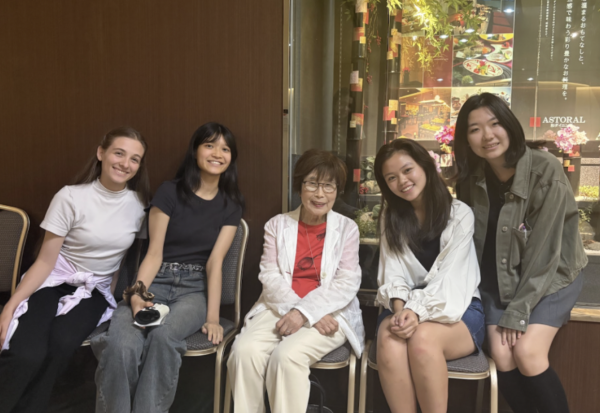
Ms. Ogura attended the 2023 G7 summit in Hiroshima. She recounted her experience talking with President Zelensky as they toured the exhibits at the Peace Memorial Museum, “He was trying so hard not to shed a tear. When he saw an exhibit about Hiroshima in 1945, he said it looked just like Ukraine. I told him, ‘Please evacuate the children first. The fear will stay with them for the rest of their lives.’ He wants the war to end immediately, but cannot make it happen. And when he goes home, missiles may arrive at any moment—that is the reality.”
As the hope for the total elimination of nuclear weapons remains extremely challenging, the hibakusha face another major issue: they fear their testimonies will fade and that the new generations will not know their devastating history. Presently, the average age of the hibakuusha exceeds 86, with only 100,000 remaining. While the 80th anniversary is a remarkable milestone, it reminds us of the remaining living witnesses and the risks that their memories may be forgotten over time.
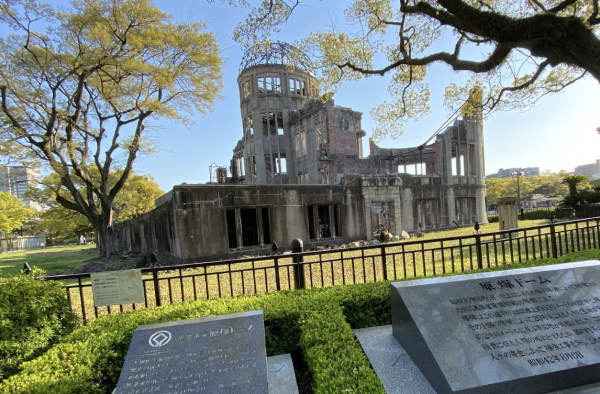
However, these testimonies are crucial to inform people about the enormous human costs and suffering of nuclear weapons. These stories are not simply testimonials: they are a warning for human survival. Ms. Ogura states that she finds hope in the younger generation coming to Hiroshima to carry on her legacy: “When I see the faces of young people—although wars continue and nuclear weapons have not yet been abolished, and part of me feels we are still far from the end—there is hope when young people come to Hiroshima and listen to my story. I feel a sense of relief in passing the message on to them:‘From here on, it is your turn.’”
Ms. Ogura and Mr. Hamasumi will continue their efforts to bring their testimonies to global audiences. Ultimately, it is now up to the next generation to decide how to carry on the legacies that the hibakusha entrusted to us, and how we choose to act on the message they are leaving behind.


