



































Every October, the world holds its breath. Even in the quietest laboratories, focused classrooms, and busy workplaces, people wait in anticipation for the grand reveal of the Nobel Prize winners, individuals whose ideas and efforts have reshaped the world. The Nobel Prize, one of the most prestigious honors, is awarded annually for outstanding achievements in six fields: physics, chemistry, physiology or medicine, literature, peace, and economics. Surprisingly, Japan received thrilling news—not just one, but two of this year’s Nobel Prizes were awarded to Japanese scientists: Dr. Shimon Sakaguchi in Physiology or Medicine and Dr. Susumu Kitagawa in Chemistry. Despite their accomplishments in two different scientific fields, both scientists’ discoveries have not only solidified Japan’s science and technology, but also inspired more scientists to pursue their research and scientific interests.
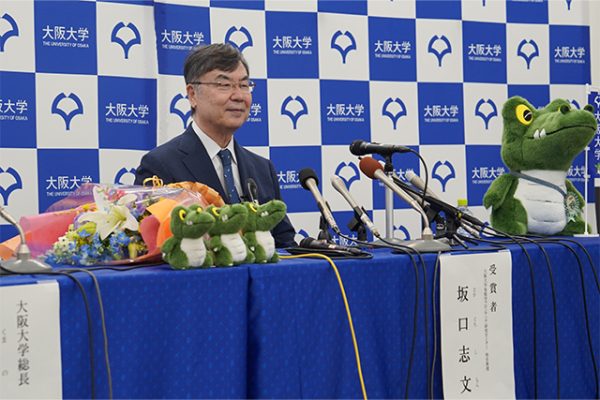
To begin with, on October 6th, Dr. Shimon Sakaguchi, a professor at Osaka University, was awarded the Nobel Prize in Physiology or Medicine for his groundbreaking discovery of regulatory T cells, a special type of immune cell that prevents the body’s immune system from malfunctioning by attacking its own healthy tissues. Prior to the discovery, scientists believed, following the theory of Paul Ehrlich, also a Nobel Prize winner in Physiology or Medicine in 1908, that there was an unknown regulatory system that allowed the body’s own cells to be separated from those of non-body cells. However, through Dr. Sakaguchi’s “dedication for a long time to continue the search when others had given up, just for the cells that might regulate [mechanism]”, as stated in his interview after winning the prize, he revealed the groundbreaking effects of regulatory T cells. T cells, just as how Ehrlich had expected the unknown mechanism to operate, were white blood cells that would fight infections and protect us from disease by preventing the immune system from attacking “self” body cells. Moreover, his discovery majorly shifted scientists’ understanding of the immune system, opening new paths towards developing treatments for cancer and other autoimmune diseases.
Further in his interview with the Nobel Prize interviewer, Dr. Sakaguchi shared more insights regarding what his achievement of the Nobel Prize means for the field of immunology. He stated, “I believe that [this discovery] will encourage immunologists and then physicians to apply the [T cells] to treat the area of immunological diseases, control cancer immunity, or transplantation, or better or safer organ transplantation to prevent organ rejection.” and that “until [the T cells contribute a real treatment in the clinic], we must continue working on our research with the hope that it can be applied.” As a matter of fact, it may only be a matter of time before T cells become the heroes of modern immunology and treatments. For example, type 1 diabetes, a condition where the body’s immune system attacks the cells in the pancreas that make insulin significant for blood sugar level in our body, is currently treated with immunosuppressive drugs. However, despite the drug’s ability to calm the immune system, which can reduce symptoms, it also weakens the body’s ability to fight other infections. Here, with T cells applied, scientists could teach the immune system to ignore the body’s own cells without suppressing it fully, making treatment safer and more precise while allowing the body to maintain its ability to fight other infections. Likewise, cancer treatments would also be able to preserve healthy cells through more precise and targeted chemotherapy and radiation treatments.
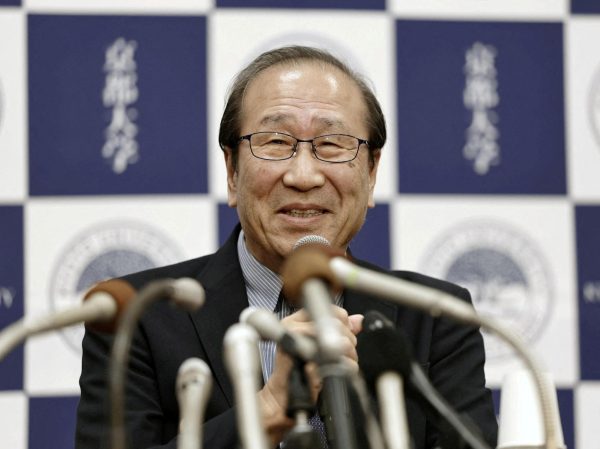
Soon after, on October 8th, Dr. Kitagawa, a distinguished professor and executive vice‑president for research promotion at Kyoto University, was awarded the Nobel Prize in Chemistry for his pioneering development of metal organic frameworks. Prior to the discovery, scientists had only speculated on the effectiveness of such molecular architecture; they believed it was versatile, but could not prove it with sufficient evidence. However, Dr. Kitagawa’s beliefs were different. As stated in his interview with the Nobel Prize interviewer, he believed “if several people said this is impossible and this cannot be realised, [he has] a very big motivation,” and that “we need to show absolutely the origin of the science or origin of materials”. Consequently, his great passion and relentless dedication to discover the most profound knowledge of science successfully proved that such models could be made effective by creating metal organic frameworks, a special kind of material made by connecting metal atoms with organic molecules to form a porous, sponge-like structure. Such a sponge-like porous material would “soak up” harmful gases, store clean energy, or even help make new medicines, while maintaining the overall structure with the organic molecules stable and flexible. With this practical model, Dr. Kitagawa opened a gateway for scientists to apply the model to real-world applications, such as solving environmental issues or altering chemical reactions.
Further in his interview with the Nobel Prize interviewer, Dr. Kitagawa shared stories of other individuals who motivated him to continue pursuing his scientific interests. Namely two individuals from the same university, Kyoto University, were Professor Fukui and Yoshino, both Nobel Prize winners in 1983 and 2019, respectively. Dr. Kitagawa stated, “Strong motivation to create new materials is, in a sense, in the tradition of Kyoto University,” and that “[Professor] Fukui is [his] academic grandfather in the laboratory, and [that he is] the grandson in almost the same laboratory.” Being part of this legacy of Kyoto University fueled his determination to push the boundaries of materials science. Later, Dr. Kitagawa’s discovery became the cornerstone of solutions to problems such as capturing carbon dioxide, harvesting water from arid air, and designing next‑generation catalysts; all of which rely on the effective absorption and storage of gases or liquids within these tiny, sponge-like structures.
In conclusion, 2025 has shown that Japan’s scientists aren’t just breaking records—they’re opening new doors to a wide range of further achievements. Also, this highlights the strength of Japanese universities as supportive and advanced research communities that encourage innovation and sustained scientific inquiry for scientists to persistently accomplish. The accomplishments of Dr. Shimon Sakaguchi and Dr. Susumu Kitagawa serve as a powerful reminder of the impact that curiosity, dedication, and perseverance can have on science and society. They highlight the importance of persistent efforts, the willingness to step out of the box and pursue questions others might have abandoned, and the courage to reject or approve controversial concepts. Ultimately, the 2025 Nobel Prizes remind us that science is full of challenges, patience, and rewards, and that these pursuit of knowledge shapes a better, more enhanced, and more hopeful world.
